

What the 2026 Cyclospora Outbreak Should Change in Your Operation
The 2026 Cyclospora outbreak is now the largest parasitic foodborne event most of us will hopefully see in our careers. So, it is worth studying because much of what happened was beyond any individual foodservice operator’s control. The outbreak that ran through June and July was linked to shredded iceberg lettuce. Not from a dirty kitchen. Not from a cook who didn’t wash his hands. It arrived at the back door already contaminated, and by the time anyone knew, thousands of people were sick.
Here’s the short version of what happened. In mid-July, investigators traced a wave of illnesses back to one processor, Taylor Farms de Mexico. At first, it was believed to be lettuce products traced to a popular Mexican fast-food restaurant, but later recalls included products provided to foodservice and retail locations.
The case count kept climbing. About 400 in mid-July. Then 1,600. Then nearly 2,000. As of early August 2026, the number of illnesses is almost 14,000, with 740 hospitalizations and two deaths. And the real number is likely to go higher, partly because thousands of cases are still being investigated, while others will never be reported. Cases were found in 47 different states, plus the District of Columbia and Puerto Rico.
So, what is Cyclospora? Cyclospora is a microscopic parasite that causes a human intestinal infection known as cyclosporiasis. People contract the illness by consuming food or water contaminated with the parasite, typically introduced through contact with fecal matter. It is frequently associated with imported fresh produce like leafy greens, berries, and herbs.
Most of what we train on is norovirus and other bacteria, which are still vital topics, but this parasite plays by different rules, if you will. People get sick about a week later. Sometimes two. So, the guest who calls you on Tuesday is talking about last Tuesday’s lunch. And it can take weeks for investigators to start putting the pieces together. By then, your case labels are long gone in the trash, and your invoice is buried.
Unlike common bacterial pathogens such as E. coli or Salmonella, Cyclospora poses unique challenges for the food industry. Washing doesn’t fix it. Neither does your produce wash nor your sanitizer. Of course, cooking kills it, but who cooks lettuce? There is no step in your kitchen that makes contaminated lettuce safe.
When a traceback investigation or a food recall hits the news, commercial kitchens must act swiftly. Here are some considerations to explore now to help you better prepare for the next widespread outbreak.
…washing doesn’t fix it [Cyclospora]. Neither does your produce wash nor your sanitizer… There is no step in your kitchen that makes contaminated lettuce safe…
Start capturing what’s on the case.
Most receiving logs record what was delivered, not where it came from. Have your receiving person snap a photo of the case label and file it by day. A few seconds per box is all it will take once that person gets into the habit. Keep those photos and your produce invoices for at least 90 days.
There’s a federal rule (FSMA Rule 204) whose enforcement has been delayed that will require this kind of tracking for fresh fruits and vegetables, including leafy greens and fresh herbs. It kicks in July 2028. Many operators are ignoring it. Start the process now, and it will help you respond to these types of recalls.
Find out who grows your produce.
Ask your distributor rep, in an email you can save: who processes and grows your lettuce and other fresh fruits and vegetables? And tell them you want to be notified when this changes. Growing regions shift with the seasons. So, the supplier in January is often not the one shipping in July. If your distribution agreement allows them to substitute without notifying you, that’s a hole in your program.
Run a recall drill and time it.
Pick a produce item. Then find out, with a clock running, which kitchens or units received it, which lots, what was made with it, what’s still in the cooler, and what already went out. Who calls the distributor? Who checks for recall notices, and how often? Who pulls product, who documents throwing it out, who files for credit? If that takes your team more than a day as a drill, it’ll take two days to a week when it’s real. It is great to have plans put down on paper, and that is certainly the first step. But put your plans into action, see how they work in your operation, and then tweak them accordingly to improve the response.
Be proactive when issues like this make the news.
Some estimates speculate that sales at the Mexican fast-food business originally implicated in the outbreak dropped 30% on the day of the outbreak. Other retail foodservice operations noted salad sales dropped across the board as people just stopped eating lettuce. Have information available for your front-line staff, a short statement when someone asks, “is your lettuce okay to eat?” The answer should not be a 19-year-old server who shrugs. Be prepared with a response for your staff, “we don’t buy from the recalled supplier, our product comes from _____”, or “while our product comes from a different supplier, out of an abundance of caution, we pulled all lettuce from our menu for the time being”. Spend 30 minutes thinking it through before you open for the day; your staff and your customers will thank you.
The operators who came through this summer without an outbreak weren’t the ones with a better produce wash. They were the ones who could tell you, within an hour, exactly what was in their cooler and who sold it to them. That’s not really a food safety project. It’s a purchasing and paperwork project that keeps people from getting ill and keeps you from serving a product that could make them ill. Risk Nothing.
READ MORE POSTS

Food Safety Considerations for the “New Way” of Dining, Part II – Back-of-house
In our first blog this month, we discussed the importance of front-of-house practices as we emerge from the pandemic this summer and into fall. Making your guests feel safe will be an important point as we welcome them back to our establishment. The safer they feel, the more likely they are to revisit and this could, in turn, be a competitive advantage for your business.

Food Safety Considerations for the “New Way” of Dining
Spring is my favorite time of year, as we head out of the winter months, welcome warmer weather, and increase the daylight hours. As such, we turnover a new leaf and welcome new life as our grass, trees, and perennials come out of dormancy. This year as the Coronavirus vaccine continues its roll out and we welcome a third vaccine onto the market this morning, perhaps this spring we are turning over a ‘new leaf’ in a much more profound way, as we see light at the end of the Coronavirus tunnel.

Developing Good Food Safety Habits
Good habits and habit development are something that has fascinated me for several years. If you’ve attended any the training programs or presentations that my colleagues and I have conducted through our Center for Food Safety in Child Nutrition Programs, you’ve likely heard me opine about the importance of habits and how habits are created. Many times, in foodservice operations we wonder why our staff don’t follow the food safety practices we have established in our operation. Perhaps they don’t wash their hands when they are required, perhaps they just don’t use the proper method of handwashing, or perhaps we find that they don’t complete our HACCP logs as often as our program dictates should occur. And while we can stomp our feet and say “it is their job, they should just do it”, it really isn’t that simple. We can’t order people to change, although if we could, business and human resources would be so much simpler.
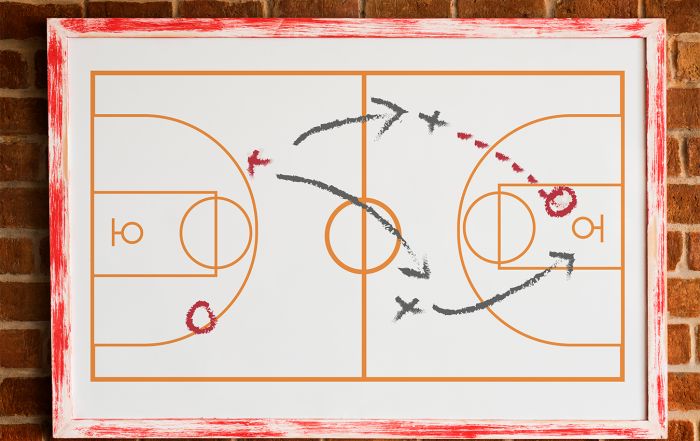
Getting Your Playbook for Food Safety Organized
As anyone who has ever worked in a foodservice operation knows, from the time food is received in your establishment to the time it is served to your customers, following proper food safety practices is crucial. What many don’t often think about is this time really should extend from the time the manager places their orders with their suppliers (including which purveyors you utilize), through the time the food is consumed – even if that consumption occurs off your premises and days after the original order was picked up by the guest. This is something that has certainly been highlighted by the pandemic as customers across the nation are utilizing take-out, curbside to go, and third-party delivery options more so now than ever before.