
Transitioning Your Kitchen from ‘Visually Clean’ to ‘Code Compliant’
A few years ago, as part of a larger food safety research grant, our research team was exploring the behavioral patterns of foodservice employees. We installed cameras in several commercial kitchens to review real-time food safety practices. To be clear, these were not hidden cameras. Yet, we’ve done enough research to know that even when employees know they are being watched, whether by a camera or an in-person observer, most cannot sustain a forced behavioral change for long. Eventually, they revert right back to their normal habits.
Without turning this blog into a Research 101 symposium, I want to highlight one specific operation that caught our eye. Visually, it was an immaculate kitchen, so spotless that any health inspector or customer would have been deeply impressed. At the end of the shift, we watched an employee take great care to wipe down every single countertop and vertical surface with a “sanitized” cloth. That cloth was taken from the sanitizer bucket at the very start of the process. It was never rinsed or refreshed again. That single towel wiped down everything: prep tables, cooler handles, warming cabinets… everything. At one point, it even wiped the floor.
We tend to see this scenario quite often, maybe not always someone wiping the floor and then going back to the countertops, though that does occur more frequently than you might think. But we often see that employees and managers equate visual cleanliness with regulatory safety. While a sparkling kitchen can be a great indicator of pride and hard work, it is not the end-all and be-all of food safety. In fact, health inspectors aren’t looking for cosmetic neatness; they are trained to find the invisible systems that prevent foodborne illness.
…to avoid this clean-is-safe trap, managers and employees must actively retrain themselves and their management teams to look past surface aesthetics…
True food safety lives in a hidden infrastructure that has nothing to do with how shiny your prep tables are. This infrastructure begins with continuous monitoring and operational logs, which serve as the paper trail proving your kitchen is safe, not just tidy. Temperature logs for walk-in coolers, hot-holding equipment, cooling logs, and corrective action records all tell the true food safety story of your operation. The goal is to build a culture where logging is non-negotiable, not a task completed retroactively at the end of a shift, but a habit woven into the employees’ normal day. Digital food safety platforms can make this easier, but the data itself is what ultimately counts.
Of course, a log is only as reliable as the equipment gathering the data. A thermometer that reads five degrees high is arguably more dangerous than no thermometer at all because it creates false confidence. Dial thermometers, digital probes, refrigeration units, and hot-holding equipment all need to be regularly calibrated and verified against verifiable standards. By scheduling equipment calibration on a recurring, predictable basis and documenting the results, you protect that data. More importantly, this builds an environment where your staff feels comfortable reporting any equipment that seems off.
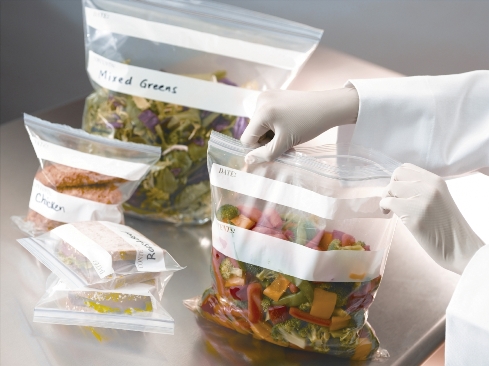
That same diligence must extend to proper product labeling and date marking. Walk through any truly compliant commercial kitchen, and you’ll find labels on everything. Labeling is not busywork; it is your frontline defense against outbreaks. When you audit your walk-ins and prep areas regularly, look past the organizational neatness to verify labeling completeness and accuracy. A kitchen where all products are labeled is one where any employee, even a brand-new hire on their first shift, can make safe, independent decisions.
Yet, you can maintain perfect logs, flawlessly calibrated equipment, and immaculate labeling, and still cause an outbreak if a sick employee is allowed to work. This is why strict adherence to employee health policies is the ultimate pillar of your hidden infrastructure. The FDA Food Code is explicit: employees experiencing vomiting, diarrhea, jaundice, or those diagnosed with reportable illnesses must be strictly excluded from food handling. But a written policy is only as strong as the culture surrounding it. If your employees feel financial pressure to show up sick or fear being penalized for calling out, your handbook is meaningless. Pair your health policies with genuine operational support and managers who actively model the behavior they expect. When leadership sends a sick employee home without hesitation, it signals to the entire team that safety takes priority over the schedule.
Ultimately, transitioning from a visually clean kitchen to a code-compliant one requires a fundamental shift in management mindset. It means learning to ask different questions during a line check. The kitchen we observed in our video research looked like a model operation, and to a casual observer, it was. But the invisible systems, the ones that keep a guest from getting sick, could have been failing behind the scenes.
Don’t let the shine of your countertops distract you from the substance of your systems. By implementing internal self-audits that prioritize these non-visual, systemic requirements, you ensure your kitchen is truly protected. Risk Nothing.
READ MORE POSTS
How Effective is Your Food Safety Training?
Basic food safety in a restaurant kitchen is not rocket science, but critically important for the crew to take the time to learn about it and for managers to set the example each day. Customers never expect or want to see a manager, chef, or a crew member make a very visible food safety mistake, like not washing hands before food prep and gloving, or touching their face or hair while prepping or handling food. Have we all seen it happen in our restaurant or as a customer elsewhere? Certainly. Are you using some creativity in your current training methods to help your staff “get it” so to speak, and reflect positive behaviors regarding food safety?
Why Does Food Spoil?
Food gradually deteriorates because of a natural process of aging, just like humans. However with all foods, there are a few things we can do that have a positive effect on the shelf life and safety of our foods at the restaurant. Some preservation is done at the food manufacturing plant, some naturally, but a better understanding of the processes may help you extend that shelf life. Preservation methods and storage conditions must be designed to reduce the rate of decomposition and protect the safety, appearance and taste of our food.
Top Food Safety Websites
You ask…How do I learn about food safety regulation? What pathogens in foods can make me sick? What temperature should I safely cook my roast beef to and how do I take food temperatures? How do I clean and sanitize anything according to the FDA Food Code? What and where is the most recent version of the FDA Food Code? Where can I find food safety educational materials galore in book form or online? Do I need them in Spanish or a Chinese dialect?