
Calibrating More Than Just Thermometers
While classic bimetallic-stemmed thermometers have largely given way to modern digital alternatives, the act of calibrating them remains a fundamental food safety ritual drilled into foodservice professionals from their first week on the job. However, if your kitchen’s verification strategy stops at thermometers, you leave significant blind spots in your food safety defense system.
Calibration is the process of configuring an instrument to produce results within an acceptable range. In a modern commercial kitchen, we rely on dozens of automated systems, mechanical components, and electronic meters to keep food safe and ensure sanitation compliance. If these systems drift off-target, the consequences can be disastrous. To achieve true operational control, operators must expand their scope and examine three frequently overlooked compliance areas: dish machines, chemical dispensers, and automated data loggers.
Whether you operate a high-temperature sanitizing or a low-temperature machine that uses chemical sanitizers, the built-in gauges are your only immediate window into compliance. The FDA Food Code requires that high-temperature final rinse cycles reach at least 180°F (or 165°F for stationary racks) to ensure the dishware’s surface reaches the required 160°F sanitizing threshold.
However, external mechanical temperature gauges on dish machines can easily lose calibration due to constant vibrations, scale buildup, and regular wear and tear. If a gauge displays 180°F but the water is hitting 172°F, you are inadvertently washing dishes in the danger zone. Verification requires secondary testing. Operators must regularly use single-use dishwasher testing labels that have been run through a full cycle to verify that the performance of the machine matches its readout.
In low-temperature dish machines, three-compartment sinks, and automated chemical dispensing systems, chemical concentration is a matter of balance. Too little chemical results in a failure to sanitize, leaving harmful pathogens behind. Too much chemical can result in chemical contamination of food contact surfaces, presenting a direct hazard to guests.
Automated wall-mounted chemical dispensers rely on small, internal metering tips to pull the precise ratio of water and concentrated chemical. Over time, chemical crystallization, water pressure fluctuations, and mineral buildup can alter these ratios. Relying solely on the dispenser to do its job without regular verification is a gamble. Dispensers must be checked against manual chemical test strips, and the delivery pumps must be adjusted if the parts-per-million (PPM) deviate from manufacturer and regulatory guidelines.
…these tasks depend heavily on your specific operation, including the volume of food you are pushing out, the exact type of equipment you use, and your production system…
As the industry shifts toward digital food safety management, automated Bluetooth and Wi-Fi data-loggers have become the gold standard for monitoring walk-in coolers, freezers, and hot-holding cabinets. These sensors provide incredible peace of mind by constantly tracking ambient temperatures and sending alerts if a unit fails. But technology is not infallible. Automated loggers require regular comparisons to ensure their internal software offset is reading correctly.
To ensure these critical checks do not fall through the cracks, operators should implement a Master Calibration Schedule. Tracking these moving parts requires structured organization rather than memory.
In my experience, there are certain things you need to handle daily, others you can tackle each week, and some that only need attention once a month. Keep in mind, though, that these tasks depend heavily on your specific operation, including the volume of food you are pushing out, the exact type of equipment you use, and your production system. While I know your time is valuable, taking a few hours to critically review your operation will yield massive rewards for your kitchen down the road.
Once you have your system in place, document everything in a centralized master logbook or within your digital operating platform. Record the date, the instrument identifier, the initial reading, any corrective actions taken, and the initials of the verifying employee. When a health inspector sees an organized, comprehensive calibration history that extends far beyond standard handheld probes, it signals a top-tier culture of food safety excellence. Risk Nothing.
READ MORE POSTS
Does Temperature Really Matter when Washing your Hands?
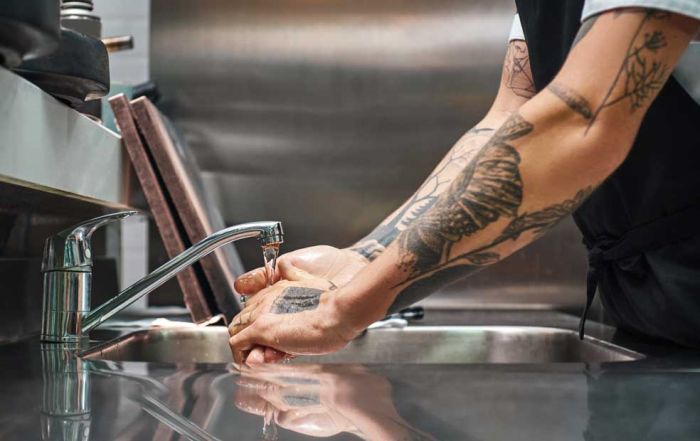
In January, I reviewed the changes to the 2022 Food Code in my blog (check out Part I and Part II), and one change to the food code that I had mentioned, but didn’t discuss in-depth, was the change that lowered the water temperature a hand sink was required to produce to 85°F, as noted in Section 2-202.12 of the code. This requirement has been in place since the publishing of the 2001 Food Code, which required a water temperature of 100°F. Prior to this, 110°F was required (see the 1999 Food Code). So why the change and does water temperature when washing your hands really matter?
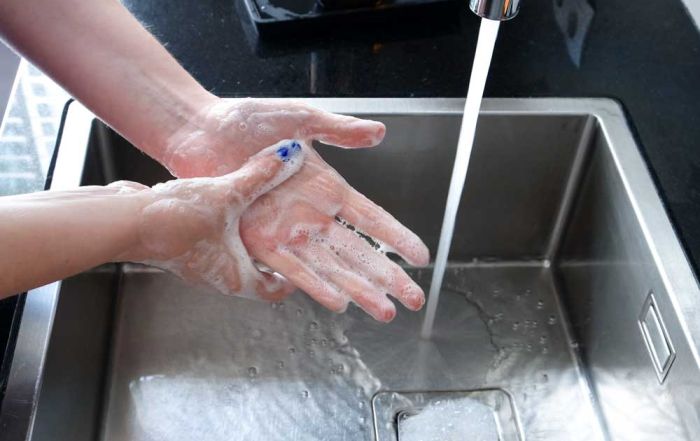
Hand sinks: Often Taken for Granted, but an Essential Part to Effective Hand Hygiene
Late in January, I received a question about hand sinks in a foodservice operation. The question pertained to school staff (teachers and aides) who were using a hand washing sink in the school kitchen. The question came as a matter of who was allowed access to the kitchen to use the sink, but the question itself caused me to go down a rabbit hole of requirements for hand washing sinks in foodservice operations.

Hot off the Press: The 2022 Model Food Code has been Released! Part Two.
Earlier in the month, we started a discussion about the changes to the 2022 Food Code. If you missed that post, late in December 2022, the Food and Drug Administration released the 2022 Food Code and I wanted to highlight a few of the changes that have been made to the code.
Hot off the Press: The 2022 Model Food Code has been Released! Part One.
It has finally arrived! Yes, the new year has arrived – but I was not referring to it. I was referring to the new 2022 Model Food Code (10th edition) that has been released by the Food and Drug Administration. I thought I might take this blog and the next blog to discuss some of the changes that have been made to the Food Code that you might see coming your way in the next few years.