
Your Food Safety Doesn’t End at the Pass: Keeping Takeout and Delivery Safe After It Leaves the Line
Most kitchens focus their food safety effort on receiving, storage, cooking, and holding. Certainly, those seem to be the areas we focus the most on in food safety blogs and webinars here at FoodHandler. And rightfully so because so many foodborne illnesses are traced back to those areas.
But what happens after that can also have a real impact on food safety? Especially if you look at the way people consume food from foodservice operations today. Just the other day, I was out to lunch with my wife, and we were seated near the entrance and what would be considered the host stand. I was amazed at how many delivery drivers from Uber Eats, Grub Hub, and all the other meal delivery apps that came in to pick up food. It seemed to be an endless parade of them walking in the door.
In the past, we would make the meal and then when the person came to pick it up, it was bagged and sent home with them. The person picking it up was often the person consuming it. Today, that isn’t the case. For operators of any restaurant, hospital room service, long-term care unit delivery, and school grab-and-go, the trip from the pass to the person eating is often the least-controlled step.
But, in healthcare, long-term care facilities, and schools, we’ve been producing food and serving it to satellite units for quite some time. In the restaurant industry, while take-out isn’t something new, it is certainly more prevalent now than it has ever been. For this reason, I am going to focus most of this blog on our restaurant partners.
Three things can go wrong in that window from when the person picks it up to when it is consumed. Hot food cools below 135°F. Cold food climbs above 41°F. And an allergen-safe meal picks up an allergen it was never meant to touch.
…once a meal leaves the line, you can’t control the driver, the traffic, or how long it sits on a counter. you can control the container, the seal, and the shelf it waited on…
Packaging: Choose Containers for the Food
Food packaging, certainly the options available for it, have expanded in the last 10-15 years. Gone are the days when a Styrofoam clamshell is your only option. When selecting the packaging and then implementing a plan to send your food out of the restaurant, here are some things to keep in mind:
- Separate hot and cold. Use separate bags or carriers. A salad next to a hot entrée warms up, and the entrée cools down. I know it increases packaging cost, but it truly is one of the surest ways to improve the temperature control of your food while they are in transport.
- Vent fried foods, seal liquids. Vented containers keep fries crisp. Soups and sauces need leak-proof lids, because a leak can carry allergens onto everything in the bag. I don’t know how many orders of sushi and bags I have received in hotel rooms while traveling saturated with miso soup.
- Fill right before sealing. Food portioned early and left uncovered loses temperature and is exposed to whatever passes over it.
- Follow the rules on reusables. Often seen in college and university foodservice operations and slowly finding its way into other business models is the reusable to-go container. If you offer reusable containers, follow your regulator’s refilling requirements. The 2026 Food Code adds clearer guidance here.
Staging: The Pick-up or Holding Shelf is Part of your Process
When to-go food really ballooned around the time of COVID, operators were scrambling to deal with the increased business. Now that we have settled into the routine and to-go has really stuck around, operators should consider how they stage food for pick-up. The pickup shelf is where good intentions fall apart. Orders wait there while drivers run late. They are also situated near the entrance.
- Set a maximum hold time. Decide how long an order may wait before it’s remade or the customer is contacted and post it.
- Use heated and cold staging. A heated cabinet or cold-hold unit for pickup orders keeps food in range while it waits.
- Don’t stack bags. A leaking sauce from one order can contaminate another.
- Limit access. Drivers and customers shouldn’t reach into the kitchen side of the shelf. Lockers or a staff hand-off point help.
- Sanitize staging surfaces on a schedule. Shelves, carts, and counters touch the outside of every bag. Clean and sanitize them regularly and make sure you assign an employee to help oversee it.
Sealing: Tamper-Evident is the New Baseline
A tamper-evident seal, such as a sticker, heat-sealed bag, or lock-tab container, shows the customer nobody opened the order on the way. It also protects you: an intact seal shows where a problem didn’t happen. Some jurisdictions now require it for third-party delivery, and it supports the food defense thinking FDA just added to the Food Code.
Allergens: Cross-Contact Doesn’t Stop at the Pass
Cooking doesn’t remove an allergen, and neither does a lid. If peanut sauce, sesame seeds, or shellfish broth gets onto a container or into the same bag, the allergen-safe meal is no longer safe.
- Pack allergen orders first. And pack them in a clean area with fresh gloves and utensils.
- Bag them separately. Never combine an allergen-free meal with other items unless every item is allergen-safe.
- Label clearly. Mark the bag and container with the accommodation and guest’s name, ideally with a distinct sticker color.
- Watch the extras. Sauce cups, seeded breads, and dessert add-ons cause many mistakes. Leave them out unless confirmed safe.
- Use two-person verification. One person packs; another checks the ticket before sealing.
Temperature Control: Plan for the Trip
Most operators turn a blind eye to the food once it leaves their operation. And as a former operator, I can see why. But, in truth, if there is a foodborne illness that occurs, the papers won’t run the name of the delivery driver, they will run the name of your business, so we need to pay careful attention to this, too.
- Start hot food hot. Pack straight from proper hot holding so there’s margin for the trip.
- Pre-chill cold items and keep them away from hot ones.
The meal your team cooked correctly deserves to arrive correctly. A few small changes at the pass protect your guests long after the food leaves your kitchen. Risk Nothing.
READ MORE POSTS

Meat Color and Doneness: Persistent Pinking
Late in June, my family and I were able to visit the Black Hills, an area of the country in which I have not had the opportunity to spend much time. One evening, as we dined at a local restaurant, I observed a table across the dining room sending back a dinner. While I couldn’t hear the entire conversation and I certainly wasn’t trying to eavesdrop, it was apparent that the customer was unhappy with the cooking of their hamburger and was sending it back because it was too pink in the middle. That immediately brought to my mind the phenomenon known as persistent pinking. A term I became familiar with because of work done by some colleagues here at Kansas State, which they present each summer to a group of foodservice operators who join us on-campus for an in-depth week-long look at all things food safety.
Quat Binding – Why this Can Have a Disastrous Impact on Your Sanitation Program.
In June, I had the opportunity to represent FoodHandler and speak on food safety behavior for customers of Martin Bros. Distributing in Waterloo, Iowa. One of the questions that was asked caught me a little off guard. The question was about quat binding. It caught me off guard not because it was a bad question, but only because it was not something I had previously been asked nor had not yet been exposed to the phenomenon. However, I soon learned that in certain jurisdictions, it is resulting in changes to how sanitizing cloths are to be stored in sanitizing buckets (or not) in the foodservice industry. When I returned home from the trip, I had to dig into it to learn about what quat binding is and how it might impact foodservice operations.
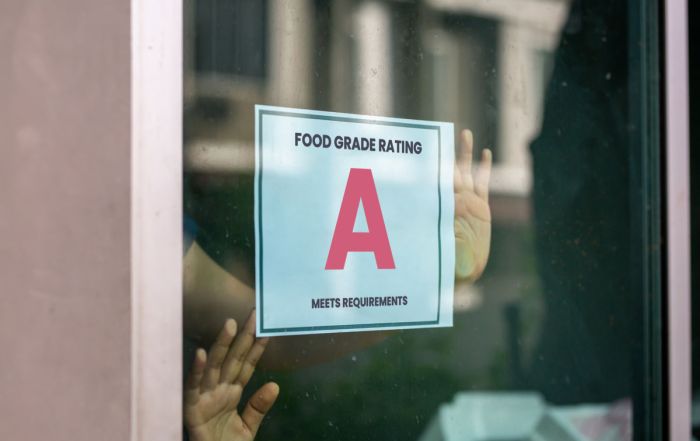
Are Grades for Foodservice Inspections a Good Idea?
I generally try to stay away from controversial topics in my blog, but this is one I thought it might be interesting to discuss. Occasionally on my travels, I will come across a state or a local jurisdiction that requires foodservice inspection scores be posted in the window of the establishment. The idea is to allow would-be customers the ability to see how the foodservice operation in which they are about to eat scored on their latest health inspection.
Neglected Safety: CDC Report Casts Doubts on the Ability of the Foodservice Industry to Ensure Ill Workers Stay at Home
Early in June, the Centers for Disease Control and Prevention released a report outlining foodborne illness outbreaks in retail foodservice establishments. The report outlined outbreaks from 25 state and local health departments from 2017 through 2019.