
The Nod is Not Always Comprehension
In my former role as a manager in the restaurant industry and my current role as a faculty member, I have the pleasure of working with employees, and now students, from many different countries. In both of these positions, communication is crucial. I am sure you have experienced this before yourself. You finish walking a new dishwasher through the three-compartment sink procedure, you ask, “any questions?”, and you get a nod. A week later, the sanitizer is way over the correct concentration, and nobody can tell you why.
…the nod was not a lie. It was politeness, or embarrassment, or the reasonable calculation that admitting confusion on day three is a good way to lose a job…
In a kitchen where a meaningful share of your staff works in their second or third language, “any questions?” is nearly useless. And comprehension is the whole point. The Food Code doesn’t ask whether you delivered the training. It asks whether your people know what they’re doing.
The most common mistake I see is a manager translating the SOP binder into Spanish, or whatever other language is spoken in the kitchen, filing it, and considering the problem solved. Three things go wrong with that.
First, not all of your staff may speak Spanish. Depending on your market, you may have Haitian Creole, Nepali, Somali, Mandarin, Arabic, Tagalog, or Mam speakers on the same shift.
Second, literacy in a first language is not guaranteed. Some of your best cooks may read very little in any language, and a translated wall of text helps them no more than an English one did.
Third, food safety vocabulary is technical, and technical vocabulary is exactly where translation breaks down.
In research, when we build questionnaires for speakers of other languages, we don’t just translate them. We have a second translator take the translation and put it back into English, so we can confirm that the question we meant to ask is the one that was actually asked. It’s called back-translation, and it catches things you would never catch otherwise.
Just for fun, I ran “priority violation” through an online translator. It came back as infracción de prioridad. I translated that back to English and got “failure to yield right of way.”
Not quite what we were hoping for. And that’s a term you’d find on an inspection report. Now imagine what happens to a cooling procedure.
Should you translate? Absolutely. But treat it as one layer of several.
Stock clip art of a generic thermometer does not teach anyone anything. Photographs of your equipment, walk-in, prep table, and sanitizer bucket do.
Build your critical SOPs as photo sequences. Four to six images, shot on a phone, showing the actual steps in the actual space. Correct glove change. Correct cooling setup for the pans you actually own. Correct sink setup with your chemicals and your test strips. Post them where the task happens, not in a binder in the office.
A photo of your own dish pit beats a paragraph in any language, and it beats a translated paragraph, too.
Another thing to consider is implementing the color-coding system you learned about in your food safety class. This works because it removes reading from the decision entirely. It fails when it’s inconsistent.
Cutting boards, cleaning cloths, brushes, scoops, and containers should all follow a single system across your entire operation, including catering and any off-site operations. If the red cutting board is used for raw meat on Tuesday, red should be used for raw meat on Saturday, and at all locations in your operation. Purple is the widely recognized convention for allergen-specific equipment, and I’d encourage you to adopt it rather than invent your own, because staff who move between employers will already know it.
Then make the key visible. A laminated chart at eye level showing each color next to a photo of the food it belongs to. No words are required.
When it comes to temperature logs, visual design is important. Numbers are already universal. Your job is to make sure that reading a number is the only literacy the chart demands. Print target temperatures large and bold, in numerals. Color-band your ranges so green is the safe zone and red requires action. Put a photo of the specific unit on its own log sheet so there’s no ambiguity about which cooler the reading belongs to. Replace written corrective-action instructions with a visual path.
Same principle for cooling. Two clock icons and two numbers communicate the two-stage requirement far better than a sentence about 135ºF to 70ºF in two hours.
Several accredited food protection manager programs offer training materials and certification exams in languages other than English, and food handler courses are often available in an even longer list. Language availability varies a lot by provider, so check before you buy rather than after.
In the end, stop asking “any questions” and replace it with “show me.” Watch the employee perform the task. Have them set up the sink, take the temperature, and change the gloves while you stand there. Then have them teach it back to the next new hire.
Demonstration is language-independent, and it’s the only reliable evidence you have that training happened. It’s also exactly what an inspector looks for when evaluating whether your food employees have the knowledge required by the code. The goal isn’t a binder that proves you trained people. It’s a kitchen where the right thing to do is obvious to everyone standing in it, no matter what language they think or speak in. Risk Nothing.
READ MORE POSTS

Be Aware When You Prepare – Food Prep Tips
The subject of food preparation covers some very broad, basic principles within food safety, with many steps associated with “risk” in some recipes. Certainly, preparation steps are where the most mistakes have occurred if a foodborne illness should occur. Outbreaks usually happen when more than one mistake occurs during prep, but sometimes it only takes one. Cooking is the biggest risk for raw foods, but all foods become ready-to-eat foods at some point in final preparation steps and that’s where the most care is required.
Food Gloves & Latex Allergy Education
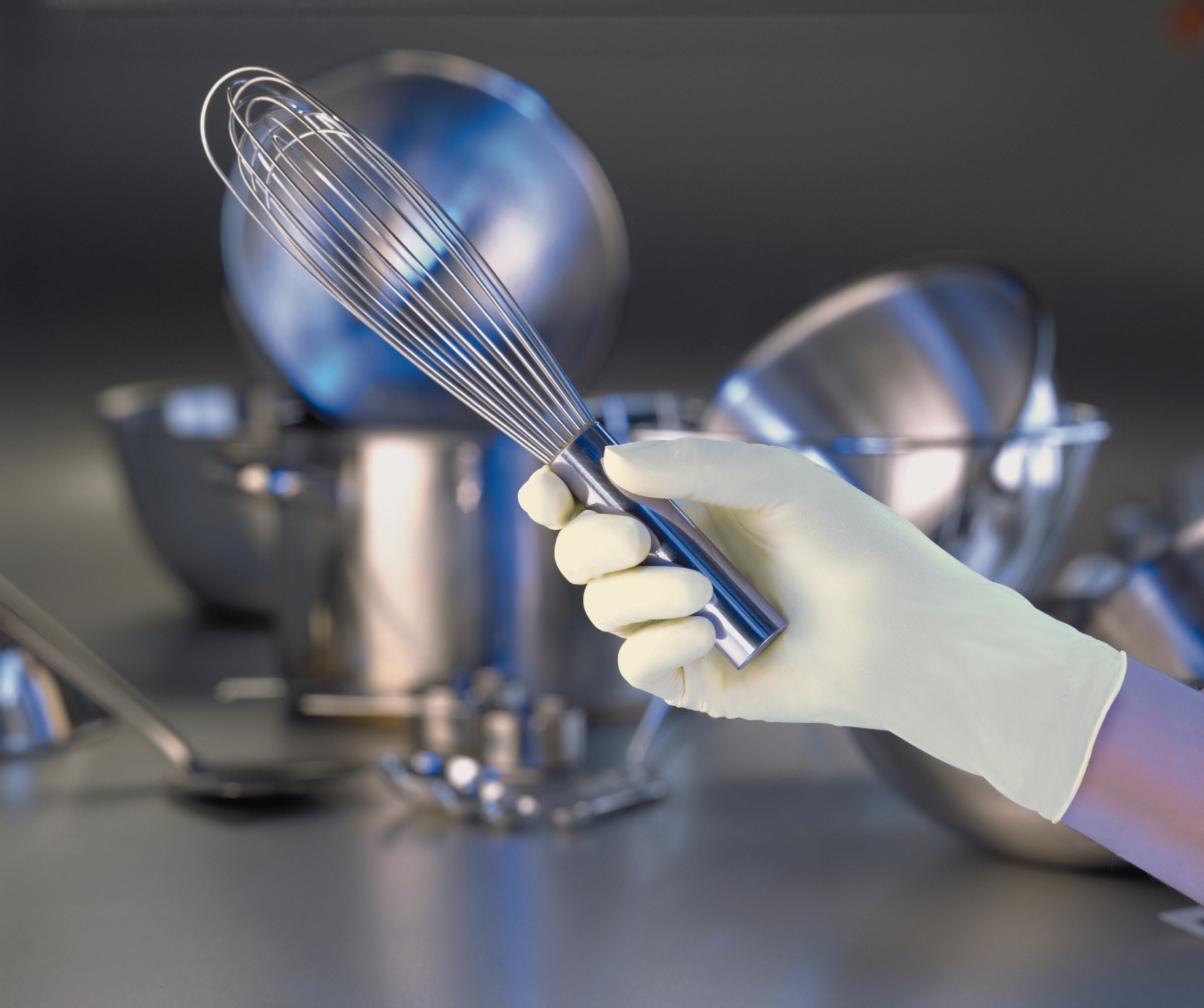
Politicians joke about the endless stretch of rubber chicken dinners they may consume in an election year. For people with a latex allergy, such a prospect may be no laughing matter. While latex serves as an effective barrier glove material and has the best fit because of its elasticity, the risks associated should not be ignored. The solution is not simple and many options are available for operators today. It should always be mentioned that handwashing (before putting on gloves) is always the primary barrier to contamination and gloves are considered a good secondary barrier.
Foodborne Illness Myths & Facts
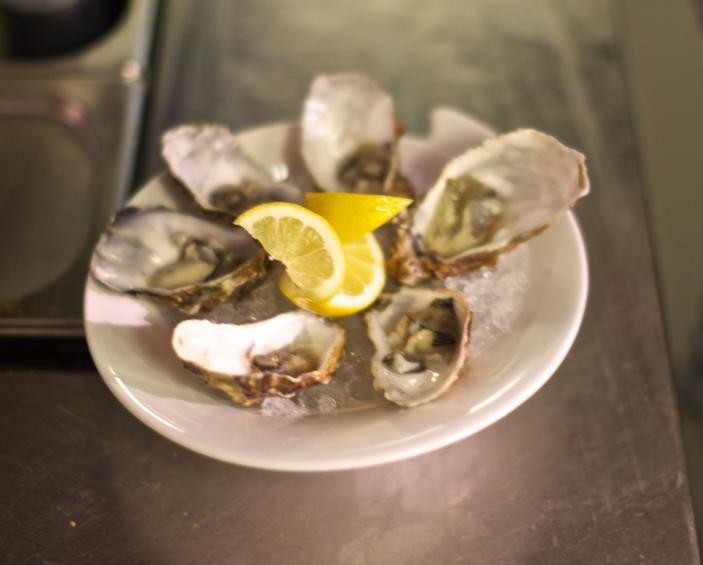
“It must have been something I ate.” That’s the typical statement when a person develops some relatively minor symptoms from food. Maybe not severe enough to go to the doctor so you choose to tough it out without medical care. Sudden onset of flu-like symptoms such as onset of stomach cramps, diarrhea, vomiting and fever could possibly mean you are the victim of a foodborne illness. The illness is sometimes referred to as “food poisoning”, but it’s often misdiagnosed.
Don’t Compromise: Clean and Sanitize
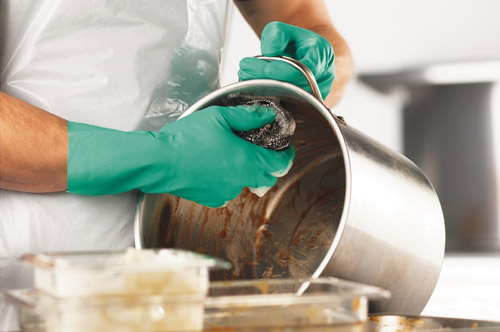
The subject is cleaning and sanitizing. Chefs, food service directors, managers and staff try to practice safe food-handling at every turn in the kitchen. Don’t let that effort go down the drain by slacking off on the many aspects of sanitation. That includes dish and ware-washing techniques (pots, pans, equipment), and cleaning all the areas that give us that “neat as a pin” appearance in your customers eyes. Customers seldom fail to bring that soiled silverware or glass with lipstick on it to the attention of the manager or wait staff. Improperly cleaning and sanitizing of food contact equipment does allow transmission of pathogenic microorganisms to food and ultimately our customer.