
The Hidden Danger of Kitchen Biofilms
In previous blogs, we discussed why cleanliness is not always safe in the kitchen of a food service operation. The fact is that your employees can do everything right in your cleaning program. They clean as they go. They are mindful of preventing cross-contamination. They follow the proper procedures for cleaning visible dirt and grime from the surface first before moving on to sanitizing. They ensure they are following all directions on the cleaners and sanitizers they use. They test for proper sanitizer concentration. And yet, somewhere in your kitchen right now, a microscopic city of bacteria may be thriving, completely untouched by everything you’re doing.
That’s the unsettling reality of biofilms, and it’s one of the most underappreciated food safety threats in commercial kitchens. It is a threat that every foodservice operation should understand and develop protocols to eradicate from its operation.
Individual bacteria are relatively vulnerable on their own. But when they find the right surface, maybe a floor drain, maybe a prep table, or maybe a cutting board, they anchor themselves, begin to reproduce, and create a protective substance around themselves, creating a fortress that helps protect them from sanitizers and typical cleaning and sanitizing protocols.
The result is a layered, organized colony of microorganisms that can include pathogens such as Listeria monocytogenes, Salmonella, and E. coli, all living comfortably beneath a shield largely invisible to the naked eye. Biofilms don’t announce themselves. They don’t smell. They don’t discolor your stainless steel. In a visually clean kitchen, they can go undetected for weeks or months.
…scrubbing disrupts the biofilm’s physical structure… dislodges the bacterial colonies, and physically removes them from the surface. Only then does sanitizer have a fighting chance…
Once a biofilm is established, standard sanitizers such as quaternary ammonia, chlorine-based compounds, and even iodine solutions used in our foodservice operations cannot effectively penetrate the biofilm. The chemistry that works perfectly well against free-floating bacteria is essentially blocked when bacteria are protected inside a mature biofilm.
Studies have shown that bacteria living within a biofilm can be anywhere from 10 to 1,000 times more resistant to antimicrobial agents than their free-floating counterparts. This is not a failure of your sanitizer. Sanitizers are formulated to reduce microbial loads on surfaces that have already been properly cleaned. They are the final step, not a substitute for physical removal. When kitchens skip or rush mechanical cleaning and rely solely on sanitization, biofilms don’t just survive, they compound.
This is why the FDA Food Code and food science in general consistently emphasize the critical importance of the cleaning step before sanitizing. Specifically, mechanical action.
Scrubbing disrupts the biofilm’s physical structure. Abrasion breaks apart the structure, dislodges the bacterial colonies, and physically removes them from the surface. Only then does sanitizer have a fighting chance against whatever microbial residue remains. Cleaning is not simply “wiping something down.” It requires friction, appropriate cleaning agents, and enough contact time to do the job before any sanitizer is ever applied.
Practically speaking, this means training your team to scrub, not just wipe. It means using brushes, not cloths alone, on high-risk surfaces like floor drains, gasket seals, cutting board grooves, and crevices where biofilms form. It means recognizing that a smooth, dry-looking surface can still harbor an invisible colony if it was never properly scrubbed in the first place.
Biofilms are a useful reminder that food safety is, at its core, a science. A surface can look spotless and be genuinely dangerous. Structured cleaning protocols that prioritize mechanical scrubbing before sanitizing, regular deep-cleaning schedules for high-risk zones, and ongoing staff training on the “why” behind each step are what separate a safe kitchen from one that merely appears to be. Risk Nothing.
READ MORE POSTS
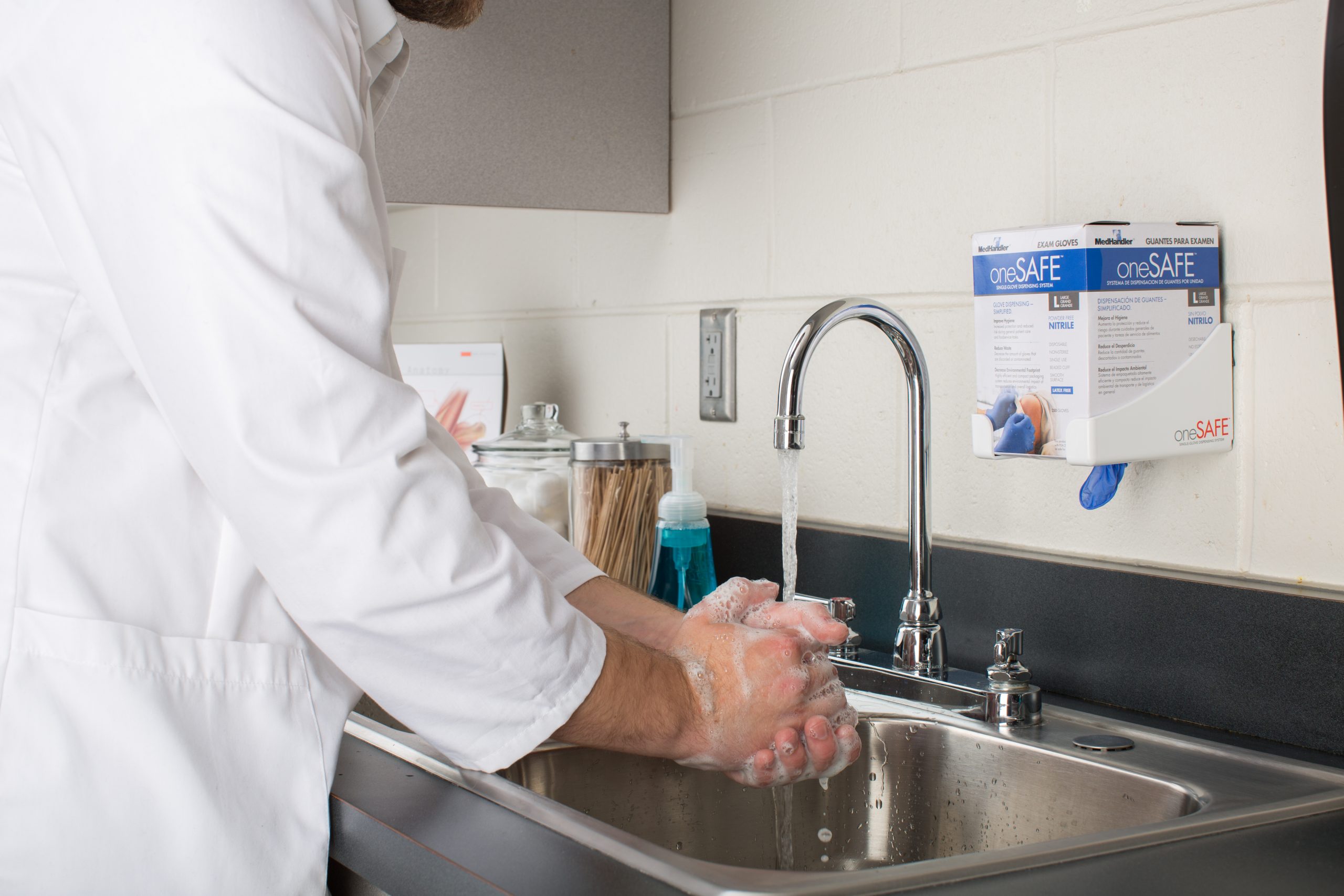
The Physical Elements of Food Service Hand Hygiene – Part I
September is National Food Safety Education Month and the theme has a rhyme to it – “Keep Hands Clean with Good Hygiene”. Hand washing is one of the public’s best defenses against the spread of both common and rare, even life-threatening, diseases including those caused by food, and against gastrointestinal infections caused by such organisms as the Norovirus, which plagues the cruise ship industry and food service in general.
The Incredible, Edible Egg Safety Quiz
This nutritious, delicate food is a part of many food service menus as a main course and one of the most common ingredients. The U.S. Dept. of Agriculture says Americans consume an average of 234 eggs per person per year. Eggs have also been the source of some significant foodborne outbreaks in the U.S. from one specific type of Salmonella. While eggs are an important source of protein in the diet, an estimated 1 in 20,000 eggs in the U.S. supply will contain the SE (Salmonella Enteritidis) bacteria and can cause illness if eaten raw in foods or not thoroughly cooked before consumption.
Fetching a Pail of Good, Safe Water
In the ambitious fight for food safety, don’t overlook the safety and quality of the crystal clear liquid coming out of your faucet. The United States has controls in place to ensure we have potable (safe) water that is treated and filtered to make it taste better and have no odor. Water standards and treatment are also important in food service so we don’t need a repairman twice a year to chip away the block of lime on the dishwashers heating element with a hammer and chisel in order to replace it.

Food Safety for Pork – Part 2
Continued from part 1...