
PanPals®: A Smart Solution for Restaurants Facing Labor Shortages
The restaurant industry continues to face a growing challenge: understaffing. According to recent industry reporting, labor shortages are not only costly for operators but are also expected to persist—and potentially worsen over time.
For restaurant teams already stretched thin, this creates ongoing pressure to maintain efficiency, cleanliness, and food safety standards with fewer hands on deck.
So where can operators make an immediate impact?
The Hidden Cost of Cleanup
One of the most time-consuming tasks in any kitchen is cleaning pans, trays, and containers. When staffing is limited, these responsibilities can slow down service, increase labor costs, and pull employees away from higher-value tasks.
In an environment where every minute counts, reducing cleanup time can make a meaningful difference.
Your Best Pal in the Kitchen
PanPals® are designed to help restaurants simplify cleanup and reduce labor demands.
Made from durable nylon, PanPals® can withstand temperatures from -50º to 400º and are available in a variety of sizes to fit everything from soup kettles to full-size hotel pans.
By incorporating PanPals® into daily operations, kitchens can:
- Reduce cleaning time significantly
- Lower water, electricity, and chemical usage
- Prevent grease and food from clogging drains
- Improve overall efficiency with smaller teams
Working Smarter in a Labor-Challenged Industry
With understaffing continuing to impact the industry, solutions that streamline operations are more valuable than ever.
PanPals® allow staff to spend less time scrubbing and more time focusing on food preparation and customer experience—helping restaurants maintain standards even with limited labor.
See the Impact for Yourself
Want to know how much your operation could save in time and cost?
Explore PanPals® and use the savings calculator:
https://foodhandler.com/panpals-no-mess-easy-cleanup-high-heat-pan-liners-and-bags/
References: https://www.restaurantbusinessonline.com/workforce/understaffing-restaurants-costly-likely-get-worse
READ MORE POSTS

Remembering the Importance of Food Safety During Food Safety Education Month
In the foodservice industry, every plate that leaves your kitchen carries not just flavors and aromas, but also the responsibility of providing safe and wholesome meals to customers. Celebrated each September, National Food Safety Education Month provides a platform for foodservice professionals to reaffirm their commitment to food safety. It's a reminder that excellence in foodservice operations must always be accompanied by excellence in food safety; a reminder that any great meal begins with safe food as the foundation.

Embracing Technology for Enhanced Food Safety in Foodservice Operations
Technology. We love it, we hate it. I’ve always been fascinated by technology; I remember getting my first Blackberry in the mid-90s and thinking it was the pinnacle of technological advances. Before that, I remember ordering a dictation program in college that was going to revolutionize the way I “typed” my assignments. Looking back, it really wasn’t worth the box that the program came in. Now, we have ChatGPT that will write the entire paper for us!

Meat Color and Doneness: Persistent Pinking
Late in June, my family and I were able to visit the Black Hills, an area of the country in which I have not had the opportunity to spend much time. One evening, as we dined at a local restaurant, I observed a table across the dining room sending back a dinner. While I couldn’t hear the entire conversation and I certainly wasn’t trying to eavesdrop, it was apparent that the customer was unhappy with the cooking of their hamburger and was sending it back because it was too pink in the middle. That immediately brought to my mind the phenomenon known as persistent pinking. A term I became familiar with because of work done by some colleagues here at Kansas State, which they present each summer to a group of foodservice operators who join us on-campus for an in-depth week-long look at all things food safety.
Quat Binding – Why this Can Have a Disastrous Impact on Your Sanitation Program.
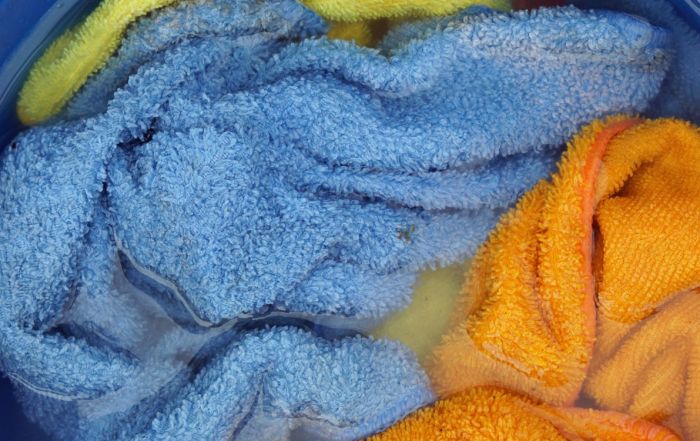
In June, I had the opportunity to represent FoodHandler and speak on food safety behavior for customers of Martin Bros. Distributing in Waterloo, Iowa. One of the questions that was asked caught me a little off guard. The question was about quat binding. It caught me off guard not because it was a bad question, but only because it was not something I had previously been asked nor had not yet been exposed to the phenomenon. However, I soon learned that in certain jurisdictions, it is resulting in changes to how sanitizing cloths are to be stored in sanitizing buckets (or not) in the foodservice industry. When I returned home from the trip, I had to dig into it to learn about what quat binding is and how it might impact foodservice operations.