
Is a Written Health Policy Right for your Foodservice Operation?
Last month, we introduced you to the foodborne pathogens every foodservice employee should know by name: Norovirus, Hepatitis A, Salmonella Typhi, Shigella, E. coli, and Salmonella. We talked about how they spread, what makes each one dangerous, and why understanding the basics of those is important for those who work in, or manage, foodservice operations. If you haven’t read that post yet, it’s worth going back to check it out.
In this blog, we’re taking the next logical step: what does your operation actually do with that knowledge? Because knowing which pathogens to be concerned with is only half the equation. The other half is having a documented, enforceable system that keeps infected employees from bringing those pathogens into your kitchen in the first place. That system has a name in the FDA Food Code, and it is referred to in §2-201. It’s called the Written Employee Health Policy.
There’s a scene that plays out in kitchens across America every single day. A line cook comes in looking a little pale. Maybe they have a stomach bug. Maybe they threw up the night before. They know they’re sick, but they come in anyway. Afterall, they need the paycheck, they don’t want to let the team down, and because nobody ever told them clearly that working sick can be a food code violation. A written Employee Health Policy is the document that closes that gap, and if you don’t have one, today is the day to fix that.
First things, first though. Is a written health policy required in the code. Here is where it is again important to check your local jurisdiction’s requirements, but as far as the 2022 Model Food Code, no, it is not required! What is required is that the permit holder ensure employees report covered symptoms and diagnoses to the person in charge, and that the person in charge act on those reports through exclusion or restriction. The code mandates the system, that is the reporting, the restriction, the exclusion, but it does not use the word “written” in describing the policy itself. However, a verbal policy is unenforceable, inconsistently applied, and leaves you with no evidence of compliance when something goes wrong. The written policy protects you as much as it protects your customers.
The FDA Food Code’s employee health provisions exist because sick food workers are one of the leading causes of foodborne illness outbreaks in the United States. The pathogens we discussed in our previous blog were chosen specifically because they can be shed in feces, saliva, or vomit, and can be transmitted directly to food through contaminated hands, surfaces, or respiratory droplets. These aren’t theoretical risks; they are the documented causes of some of the most devastating foodservice-associated outbreaks on record.
…these pathogens share a critical characteristic: infected individuals can transmit the organism to food before they feel sick, while they’re symptomatic, and in some cases even after symptoms are resolved…
That’s exactly why a proactive, written health policy, not reactive, not informal policy, is the only approach that works. In conversations with operators over many years, a few common reasons come up for why the written health policy gets neglected:
- “We communicate it verbally at orientation.”
- Verbal communication is not documented communication. If an employee claims they didn’t know the reporting requirements and causes an outbreak, “we told them verbally” is not a defensible position.
- “We handle it case by case.”
- Case-by-case management invites inconsistency, favoritism, and failure. A written policy ensures the same standards apply to the part-time server as to the long-term cook.
- “We don’t want to penalize employees for being sick.”
- This is a legitimate concern, but the solution isn’t to skip the policy. A better solution would be to pair the policy with an adequate sick leave structure. Employees don’t come into work ill because they don’t care about food safety; they come to work while they are ill because they can’t afford to stay home.
- “It’s too complicated.”
- The core requirements can fit on two pages. Simplicity is achievable.
The legal exposure here is significant. If an employee causes a foodborne illness outbreak and your establishment cannot produce a written health policy, one that the employee signed acknowledging they understood their reporting obligations, you are in a vulnerable position during any regulatory investigation or civil litigation.
So, the real answer…the only answer…to if a written health policy is right for your operation is an unequivocal yes! Not a light yes, or a “sometimes” yes, a strong, resounding YES! Section 2-201 of the FDA Food Code exists because sick food workers cause outbreaks, outbreaks cause illness and death, and the food industry has a legal and moral obligation to prevent them. The written employee health policy is one of the most powerful tools you have to fulfill that obligation. Check back in with our next blog and we will discuss some strategies to craft a policy that works for you and your foodservice operation. Risk Nothing.
READ MORE POSTS

Handling Leafy Green Salad
We have had several produce outbreaks of foodborne disease from our lettuce, spinach, and other greens in the last several years that have been devastating to the produce growers and distributors, retail grocery stores, restaurants, and consumers.
Food Packaging Safety in a Vacuum
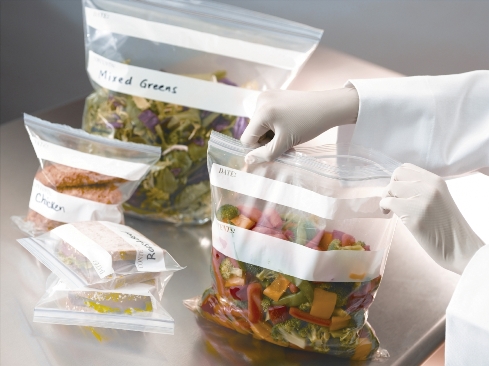
Extending the shelf life of fresh foods has come a long way in the food industry since curing meats with salt and sugar or canning vegetables with heat processing. The food service and consumer markets needed some better visual packages to draw the eye to the freshness factor and the technology of food packaging has filled our dinner plate. Vacuum packaging and modified atmosphere packaging, shortened to “MAP”, are the terms used for the method of food packaging used every time we choose convenience over more complex scratch meal preparation. According to industry statistics, billions of packages of vacuum and MAP-packaged foods flood the marketplace today. In both modified-atmosphere and vacuum packaging, food is packaged in a pouch made of barrier film.

The Eleven Commandments of Food Safety at Your Restaurant
Lists help us remember all kinds of information. Given the list of recent national foodborne outbreaks in the news, keep repeating this list to your food service team. They are kind of like “commandments”. As a professional in a food service facility we should think of the very basic food safety concepts that every crew member should aspire to learn, even though this list may have different priorities based on your menu. The first 3 apply to anyone who serves food, from a bag of popcorn to a full course meal. As chefs or managers, if we can “set the example” by repeating good food safety practices visibly to the crew, it will help them understand how important it is to the success of your facility. Thou shalt:

The Worst Customer Complaint: Foodborne Illness
Food service managers and crew try to follow the rules of food protection. Yet, occasionally a complaint may arise and these calls take priority over all other daily crises. If you have been in the food service industry long enough, you may have gotten one of these. A customer may claim, "I think your food made me ill." These words inflict instant anxiety. If it happens, here are some next steps to think about in advance of such a claim: