
HACCP Doesn’t Have to Be All or Nothing: Even Incremental Changes Can Have a Big Impact on your Food Safety Program
Most foodservice operators hear Hazard Analysis and Critical Control Point, otherwise known as “HACCP,” and picture binders full of flowcharts, scientific analyses, and regulatory paperwork. And while a full, formal plan can start to look exactly like that, the truth is that you don’t have to implement the entire system to benefit from HACCP principles. Even adopting pieces of the framework will reduce your risk of a foodborne illness outbreak.
Our colleagues who manage school foodservice operations are already well-versed in HACCP systems. School foodservice authorities participating in the National School Lunch or National School Breakfast program had to implement HACCP systems over 20 years ago. For those who don’t quite recall the fundamentals of HACCP, it is a systematic, science-based approach to identifying where biological, chemical, and physical hazards can impact your foodservice operation. Then, putting controls in place to prevent, eliminate, or reduce those hazards to safe levels. It was originally developed for NASA’s space food program and has since become the global gold standard for food safety.
The system is built around seven core principles: conducting a hazard analysis, identifying critical control points (CCPs), establishing critical limits, setting up monitoring procedures, defining corrective actions, implementing verification, and maintaining documentation.
…Perfect is the enemy of good in food safety…
If you’re running a restaurant, a catering company, a senior living dining program, or any other foodservice operation without a formal HACCP plan, you can still harness the power of this system right now. Here are a few ideas to get started:
Perfect is the enemy of good in food safety. A foodservice operation that monitors temperatures religiously, trains staff on handwashing and cross-contamination, and documents corrective actions is dramatically safer than one waiting to implement a “perfect” HACCP plan someday. Start with your highest-risk foods, build simple monitoring habits, and document what you do. Risk Nothing.
READ MORE POSTS

Food Safety for Pork – Part 1
If you haven’t tasted pork lately because you are not a red meat fan (or the other white meat), there are a few changes in the nutritional value of pork, the pork cooking temperatures, and the variety of ways we consume it. The amount of pork the average American consumes hovers around 50 pounds a year. Although pork is the number one meat consumed in the world, there are some religious restrictions on consumption of pork. U.S. consumption of pork dropped during the 1970s, largely because its high fat content caused health-conscious Americans to choose leaner meats. Today's hogs have much less fat due to improved genetics, breeding and feeding.


The Cold Chain in the Hot Summer Months
Keeping foods at proper cold holding temperatures (between 28°F and 41°F maximum or 0°F for frozen food) from the food manufacturers to your customers has to be one of our strongest links to safe food. Sometimes that is referred to in the food industry as “maintaining the COLD CHAIN”. Any slip ups in the cold chain, and we have a weak link. If you accept the food, you have greatly increased your foodborne illness risk and compromised your food quality.
Routes of Foodborne Illness & Germs
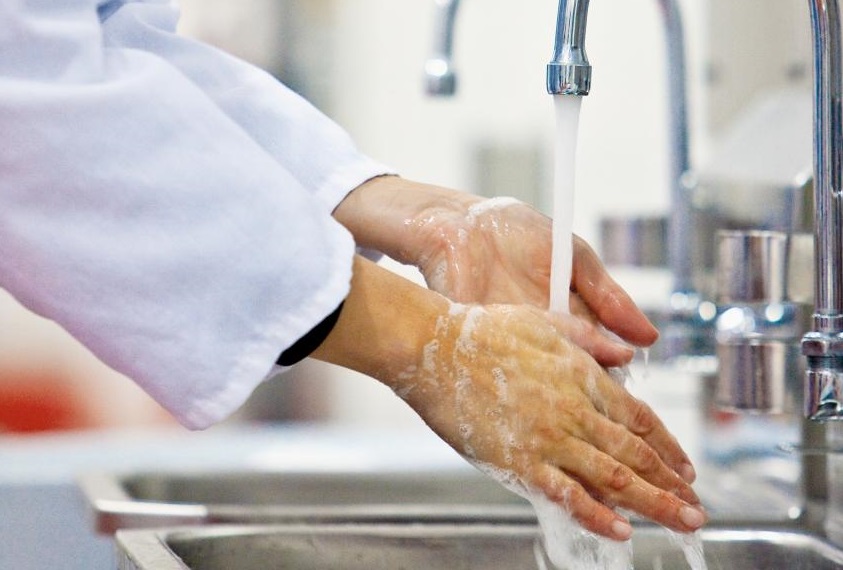
From your sniffling coworker to the raw chicken on your kitchen cutting board, everyday life is full of potential infectious hazards. With germs so common and seemingly everywhere, knowing how germs spread is vital to preventing infection and foodborne illness. There are seven possible ways for the transmission of bacteria and viruses to take place. Although some of these microorganisms in our environment are good for us and protect us, disease causing pathogens are the germs or bad guys.