
HACCP Doesn’t Have to Be All or Nothing: Even Incremental Changes Can Have a Big Impact on your Food Safety Program
Most foodservice operators hear Hazard Analysis and Critical Control Point, otherwise known as “HACCP,” and picture binders full of flowcharts, scientific analyses, and regulatory paperwork. And while a full, formal plan can start to look exactly like that, the truth is that you don’t have to implement the entire system to benefit from HACCP principles. Even adopting pieces of the framework will reduce your risk of a foodborne illness outbreak.
Our colleagues who manage school foodservice operations are already well-versed in HACCP systems. School foodservice authorities participating in the National School Lunch or National School Breakfast program had to implement HACCP systems over 20 years ago. For those who don’t quite recall the fundamentals of HACCP, it is a systematic, science-based approach to identifying where biological, chemical, and physical hazards can impact your foodservice operation. Then, putting controls in place to prevent, eliminate, or reduce those hazards to safe levels. It was originally developed for NASA’s space food program and has since become the global gold standard for food safety.
The system is built around seven core principles: conducting a hazard analysis, identifying critical control points (CCPs), establishing critical limits, setting up monitoring procedures, defining corrective actions, implementing verification, and maintaining documentation.
…Perfect is the enemy of good in food safety…
If you’re running a restaurant, a catering company, a senior living dining program, or any other foodservice operation without a formal HACCP plan, you can still harness the power of this system right now. Here are a few ideas to get started:
Perfect is the enemy of good in food safety. A foodservice operation that monitors temperatures religiously, trains staff on handwashing and cross-contamination, and documents corrective actions is dramatically safer than one waiting to implement a “perfect” HACCP plan someday. Start with your highest-risk foods, build simple monitoring habits, and document what you do. Risk Nothing.
READ MORE POSTS

Getting Your Playbook for Food Safety Organized
As anyone who has ever worked in a foodservice operation knows, from the time food is received in your establishment to the time it is served to your customers, following proper food safety practices is crucial. What many don’t often think about is this time really should extend from the time the manager places their orders with their suppliers (including which purveyors you utilize), through the time the food is consumed – even if that consumption occurs off your premises and days after the original order was picked up by the guest. This is something that has certainly been highlighted by the pandemic as customers across the nation are utilizing take-out, curbside to go, and third-party delivery options more so now than ever before.

Getting Started with Building the Infrastructure
Hopefully in our first January blog, we convinced you of the importance of establishing an infrastructure within your operation to support a safe food culture. So, how does one go about doing this? Well, like any major project, break it into small bites. In our opinion, having a written guide for employees that documents expectations related to food safety basics of employee health and hygiene, temperature controls, and cleaning and sanitizing is the first step. Having this documentation serves as a reference for training and helps fulfill the mission of most foodservice operators which is to serve safe, quality food.
Food Safety Resolutions for the New Year
Finally, 2020 is in our rearview mirror and we can all turn the page to 2021! Resolutions for the new year might be more of the same from prior years (lose weight, exercise more, less screen time, etc.) OR you may have identified new practices to implement in your operation. If the latter, likely goals included some practices related to food safety – especially given the turmoil of 2020 and heightened concern by customers. It is our philosophy that attention to safe food handling practices is a win-win for any operation because of the direct relationship between food safety and food quality, which in turn leads to customer satisfaction. This past year has also demonstrated that attention to safety can affect the bottom line. Thus, the topic of our first SafeBites webinar for 2021 is on the topic of the return on investment of food safety, it is scheduled for January 20, so register now and please plan to attend.
To Toss or Not to Toss? That is the question.
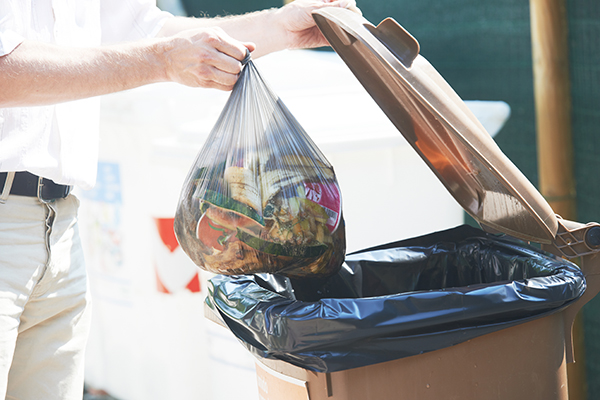
Our first blog for the month emphasized the basic safe food practices needed to keep you and your guests healthy (and happy!), especially during these times of COVID. The impact of foodborne illness can range from an uncomfortable few days to hospitalization or death. Foodborne illness IS preventable and the steps taken to keep food safe also maintain quality of food, and ultimately profitability. Think of attention to food safety as part of quality control and a win-win business strategy. Knowledge about food safety can be helpful when controlling costs as making wise decisions when determining the fate of unserved food can affect the bottom line.