

HACCP Doesn’t Have to Be All or Nothing: Even Incremental Changes Can Have a Big Impact on your Food Safety Program
Most foodservice operators hear Hazard Analysis and Critical Control Point, otherwise known as “HACCP,” and picture binders full of flowcharts, scientific analyses, and regulatory paperwork. And while a full, formal plan can start to look exactly like that, the truth is that you don’t have to implement the entire system to benefit from HACCP principles. Even adopting pieces of the framework will reduce your risk of a foodborne illness outbreak.
Our colleagues who manage school foodservice operations are already well-versed in HACCP systems. School foodservice authorities participating in the National School Lunch or National School Breakfast program had to implement HACCP systems over 20 years ago. For those who don’t quite recall the fundamentals of HACCP, it is a systematic, science-based approach to identifying where biological, chemical, and physical hazards can impact your foodservice operation. Then, putting controls in place to prevent, eliminate, or reduce those hazards to safe levels. It was originally developed for NASA’s space food program and has since become the global gold standard for food safety.
The system is built around seven core principles: conducting a hazard analysis, identifying critical control points (CCPs), establishing critical limits, setting up monitoring procedures, defining corrective actions, implementing verification, and maintaining documentation.
…Perfect is the enemy of good in food safety…
If you’re running a restaurant, a catering company, a senior living dining program, or any other foodservice operation without a formal HACCP plan, you can still harness the power of this system right now. Here are a few ideas to get started:
Perfect is the enemy of good in food safety. A foodservice operation that monitors temperatures religiously, trains staff on handwashing and cross-contamination, and documents corrective actions is dramatically safer than one waiting to implement a “perfect” HACCP plan someday. Start with your highest-risk foods, build simple monitoring habits, and document what you do. Risk Nothing.
READ MORE POSTS
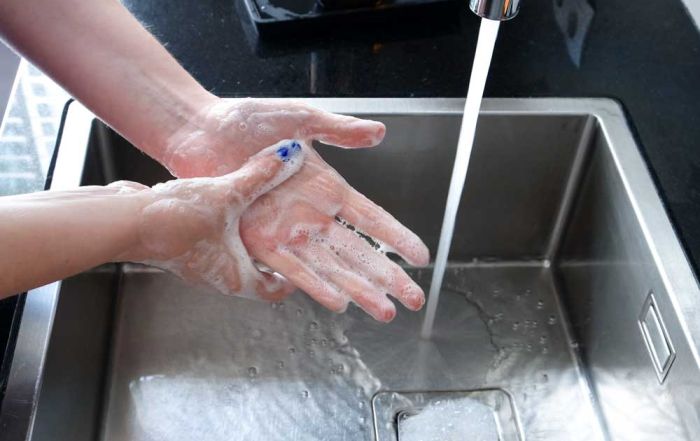
Hand sinks: Often Taken for Granted, but an Essential Part to Effective Hand Hygiene
Late in January, I received a question about hand sinks in a foodservice operation. The question pertained to school staff (teachers and aides) who were using a hand washing sink in the school kitchen. The question came as a matter of who was allowed access to the kitchen to use the sink, but the question itself caused me to go down a rabbit hole of requirements for hand washing sinks in foodservice operations.

Hot off the Press: The 2022 Model Food Code has been Released! Part Two.
Earlier in the month, we started a discussion about the changes to the 2022 Food Code. If you missed that post, late in December 2022, the Food and Drug Administration released the 2022 Food Code and I wanted to highlight a few of the changes that have been made to the code.

Hot off the Press: The 2022 Model Food Code has been Released! Part One.
It has finally arrived! Yes, the new year has arrived – but I was not referring to it. I was referring to the new 2022 Model Food Code (10th edition) that has been released by the Food and Drug Administration. I thought I might take this blog and the next blog to discuss some of the changes that have been made to the Food Code that you might see coming your way in the next few years.

Is a Food Safety Culture on your New Year’s Resolutions List?
We hope you all had a wonderful Holiday season and are getting ready for a great new year!