
Decoding the Consumer Advisory Requirement
When designing a menu featuring items such as a medium-rare steak, eggs cooked sunny-side-up, or a tuna tartare, the culinary presentation and the item’s profit margins are often the most important considerations. However, failing to provide the consumer advisory required for these dishes can result in an automatic health code violation.
To remain fully compliant with regulatory standards, retail foodservice operations that serve raw or undercooked animal foods must properly format and display a Consumer Advisory, which is outlined in Section 3-603.11 of the 2022 FDA Food Code, Consumption of Animal Foods that are Raw, Undercooked, or Not Otherwise Processed to Eliminate Pathogens.
According to the code, if an animal food, such as beef, eggs, fish, lamb, pork, poultry, or shellfish, is served or sold raw, undercooked, or without being processed to eliminate pathogens, the foodservice operation must inform consumers of the increased health risk. To satisfy this, your menu or setup must incorporate two distinct structural components:
- The Disclosure: A written statement that clearly identifies the animal-derived foods that are, or can be ordered, raw, undercooked, or without otherwise being processed to eliminate pathogens. This must be specific and developed from your menu, for example, Caesar Salad, hamburgers, or whatever items you have on your menu that can be ordered raw, undercooked, or without food preservation.
- The Reminder: Under the FDA Food Code, consumer advisory reminders must link raw or undercooked animal foods to a footnote that warns of increased foodborne illness risks, either generally or for vulnerable populations, or alternatively states that written safety information is available upon request.
…failing to provide the required consumer advisory for raw or undercooked dishes can result in an automatic health code violation…
Operators have flexibility in how they display disclosures on their menus. Executing the consumer advisory requires a balance between regulatory compliance and guest experience. Common methods include explicitly describing the items within the menu text, such as “Oysters on the half shell (raw)”, “Caesar Salad (uncooked egg)”, or “Ribeye steak (cooked to order)” or attaching a symbol (like an asterisk) directly next to the menu item name to link it to a footnote.
If you use the asterisk method, it must point directly to a reminder footnote at the bottom of the menu. While the exact wording can vary slightly depending on state and local health department adoptions, a widely accepted standard that is pulled from the food code itself reads: “Consuming raw or undercooked meats, poultry, seafood, shellfish, or eggs may increase your risk of foodborne illness, especially if you have certain medical conditions.” Be sure the font size of your footnote is legible. Health inspectors frequently cite menus in which the consumer advisory text is reduced to unreadable fine print at the very bottom margin.
Hard-copy menus used in the operation are not the only place guests view your offerings. If your establishment utilizes digital displays, online ordering platforms, QR code menus, or third-party delivery apps, the consumer advisory must be visible there as well. Ensure your website or ordering portal clearly displays the required disclosure and reminder text before a customer can finalize checkout.
If your concept changes its menu daily or writes specials on a chalkboard, printing new menus constantly is impractical. The Food Code allows alternative posting methods when menus are absent, such as brochures, table tents, or clearly visible notices displayed at the point of ordering.
A consumer advisory is more than just a box to check for a health inspector; it is a vital communication tool that protects both your guests, especially highly susceptible populations, and your business liability. Review your menus today to ensure your disclosures and reminders are properly paired, easy to read, and fully aligned with Section 3-603.11 Risk Nothing.
READ MORE POSTS

Exclusion and Restrictions: Understanding Employee Health and the Food Code
I received a call earlier in the month from a foodservice operator who suspected that one of their employees may have fallen ill and wondered if they had to send the employee home for the day. Once I started to ask a few more questions, it became obvious that the operator wasn’t really in-tune with the food code requirements on restrictions or exclusions for employees who may not be feeling well. Given that most operations are dealing with staff shortages currently and the fact that we are about to head into the fall and winter – when we tend to see an increase in upper respiratory and other illnesses, such as the flu - it seemed like a very timely and important topic for the blog this month.

Cross Contamination and the Surfaces that go Unnoticed
In October, I ran across a new research study published in the Journal of Food Protection in early-September. The article explored cross contamination in consumer kitchens during meal preparation. One of the authors was a previous SafeBites presenter, Dr. Ellen Shumaker, at North Carolina State University. Although the setting was consumer kitchens and not the commercial kitchen many of you deal with daily, the findings were very applicable to what we often see in the foodservice setting.
Emergency Preparedness: The Not-so Calm After the Storm
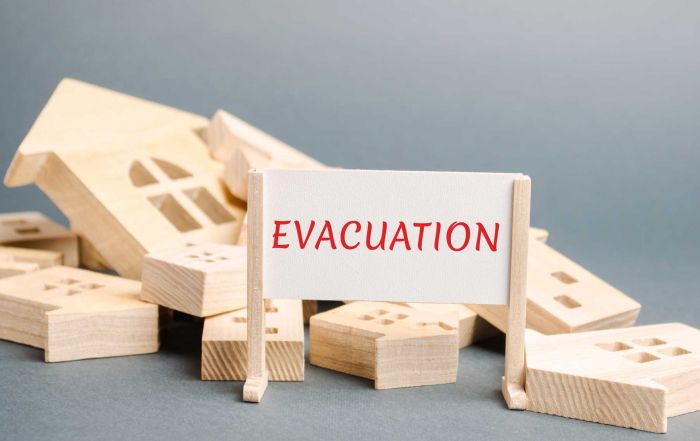
If you and your foodservice operation have been hit by an emergency or other disaster, what comes next and how do you move forward? Much of the answer to this is predicated on the actual disaster that you are dealing with – a flood is certainly a much different than a fire, but some of the food safety considerations remain the same if your business has been left intact and has not been damaged by the disaster.

Emergency Preparedness and Responding to a Disaster with Food Safety in Mind
As I write the first blog this month, the realities of the devastation in Florida are coming to light as we also deal with the aftermath of Hurricane Fiona, which impacted Puerto Rico late in September. Recent news has been focused on the recovery efforts for all who have been impacted. Thus, I thought it would be fitting this month to discuss emergency disaster planning resources in our first blog and delve into recovering from a disaster in our second blog later this month.