
Be Proactive and Don’t End Up in Food Safety Jail!
Ok, I admit – there really is no food safety jail. But there is jail and, while it is uncommon, you can be sent there for not practicing food safety. Just the other day, I ran across a news report about two individuals in Wales who were sent to jail (albeit a suspended sentence) for “failing to take action to protect food from the risk of contamination; placing unsafe food on the market; failing to comply with a Remedial Action Notice and operating the business without approval after permission to supply seafood was suspended.”
You might be thinking to yourself that this took place in Wales, and you wouldn’t go to jail in the United States for a food safety violation. While you would be partially correct that you might not go to jail for one violation, for failing to act to prevent unsafe conditions you most certainly could.
Take for example United States v. DeCoster – 828 F.3d 626 (8th Cir. 2016), where Austin and Peter DeCoster (father and son) pled guilty to misdemeanor violations of the Food, Drug, and Cosmetic Act for selling adulterated eggs into interstate commerce. The eggs were found to be infected with salmonella enteritidis and caused almost 2000 consumer illnesses across the US in the summer of 2010. In the end, a million eggs were recalled. In this example, it was clear the company was placing profits over the welfare of customers.
… the fact remains that even without legal fines and possibly jail time, consequences can be devastating if a foodservice operation is involved in an outbreak.
You might recall the Listeria monocytogenes outbreak involving cantaloupe in the fall of 2011. The owners, Eric and Ryan Jensen, were charged with unknowingly introducing adulterated cantaloupe into interstate commerce. In the end, over 147 people fell ill, killing 33 individuals across 28 different states. They faced a sentence of over six years in jail and over $1.5 million in fines. They ultimately avoided a jail sentence by pleading guilty and were sentenced to five years of probation, and were ordered to pay $150,000 in restitution, complete 100 hours of community service, and were sentenced to six months of home detention.
Yes, it is true that none of these cases involve food service operations, but it doesn’t mean that it could not happen. The practice of holding business owners accountable for the wrongful acts of their employees, even criminally, seems to be occurring more and more often. The Department of Justice implemented a policy in 2015 to hold individuals responsible for corporate wrongdoing.
While the policy memorandum did point out several challenges to pursuing such accountability, it did note, “one of the most effective ways to combat corporate misconduct is by seeking
accountability from the individuals who perpetrated the wrongdoing. Such accountability is important for several reasons: it deters future illegal activity; it incentivizes changes in corporate behavior, it ensures that the proper parties are held responsible for their actions, and it promotes the public’s confidence in our justice system.”
While there are several restaurants that have handled a large-scale foodborne illness outbreak and have not gone bankrupt, including Jack in the Box, Chipotle, and Taco Bell, the fact remains that even without legal fines and possibly jail time, consequences can be devastating if a foodservice operation is involved in an outbreak. Plunging sales, product liability lawsuits, and government fines can all take a heavy toll on operators faced with such an outbreak.
In the end, it is vital that you are keeping an eye on your employee food safety practices, making sure corners are not being cut, ensuring employees receive the proper training to prevent outbreaks and protect the public, and keeping up with recent advances in food safety.
As we turn the corner to spring, before the busy summer season comes along, take the opportunity now to make sure your staff training is up to date. Use this time to refocus on operations before this summer rolls out.
If you are looking for a way to keep up to date with the latest in food safety, we have you covered. Check out our SafeBites webinars, including a recent webinar on the 2022 food code changes. We have an exciting set of webinars planned for the rest of the year. In the meantime, if you have any food safety questions, we are a quick email away and would be happy to assist. Risk Nothing.
READ MORE POSTS
Food Defense Plan Resources – at just the right price…
Earlier in the month, I discussed the importance of having a solid food defense plan in place for your foodservice operation. Even if the first version of your plan is not perfect, it is a start. Having plans down on paper will force you to think through the process and ensure the vulnerable points where opportunities exist for possible contamination within the operation are mitigated.
Don’t Turn a Blind Eye to Your Food Defense Practices
Late last week, as I mindlessly scrolled through Twitter, I ran across a Tweet suggesting the #IceCreamChallenge from summer 2019 was the real cause of the Coronavirus spread. Of course, the Tweet was made tongue in cheek, but it did cause me to reflect on that challenge, which had a short life on social media in the summer of 2019.

Salmonella and Listeria monocytogenes: Serious Threats to the Safety of Food
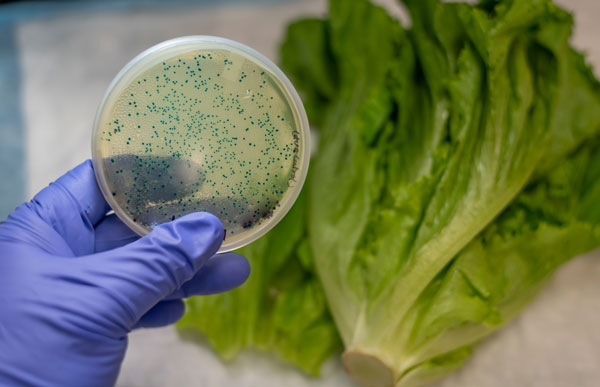
Earlier in the month, I mentioned the top microbial enemies we all face in foodservice operations, E. coli, Campylobacter, Salmonella, and Listeria monocytogenes. While we discussed E. coli and Campylobacter, we did not get around to discussing Salmonella or Listeria monocytogenes.
E. coli, Campylobacter, Salmonella, and Listeria monocytogenes…oh my!
Last month, I blogged a bit about the human factor in food safety. In the foodservice management realm, I do think the human factor is our biggest challenge, day in, day out. While the human factor is a major contributor to most foodborne illness outbreaks, we can’t forget about the microbial enemy we face on a daily basis.