

Stop it in its Tracks: Mitigation Measures for Hepatitis A
As we discussed in our first January blog, hepatitis A is a viral infection that can cause a serious liver disease. Because it is so serious and the incidence is increasing, it is important to take steps to mitigate its impact on our employees, our customers, and ourselves. There are three main mitigation practices that should be employed: vaccination; exclusion; and good employee hygiene practices.
Vaccinations
As mentioned in the previous blog, there is a vaccination that will protect people from hepatitis A and it is a good idea for each of us to get that vaccination to protect our health. It is interesting that it is the only foodborne illness for which there is a vaccination. It is an inexpensive measure when compared to costs of dealing with the consequences of an outbreak.
Most foodservice operations don’t require hepatitis A vaccinations for its employees, and most health departments across the country don’t have such a requirement. But there are a couple of case studies where individual health departments have imposed a mandatory vaccination requirement with impressive outcomes. St. Louis County, MO has a mandatory vaccination requirement for foodservice employees and the number of reported infections has decreased. Clark County, NV (Las Vegas is in Clark County) was experiencing a higher number of confirmed cases of hepatitis A than the national average, so mandatory vaccinations for foodservice employees was implemented in the late 1990s. The hepatitis A rates dropped to historic lows by 2010. They dropped the requirement in 2012 and since have been involved in a hepatitis A outbreak. These two examples make a good case for imposing a requirement for hepatitis A vaccinations for food handlers. It also provides good evidence as to the efficacy of screening employees for hepatitis A if there is not a vaccination requirement.
Exclusion
Hepatitis A is one of the diagnoses that employees must report to their supervisor, whether they or household members have the diagnosis. They also must report jaundice, a common symptom of hepatitis A (although it may appear only as the infection advances). As per government regulations in the Food Code, these employees must be excluded from the operation AND the supervisor should notify the regulatory agency about the situation. Food handlers with hepatitis A or jaundice must have a written release from a medical practitioner before they can return to work, and be cleared by the regulatory (health) agency.
Employee Hygiene Practices
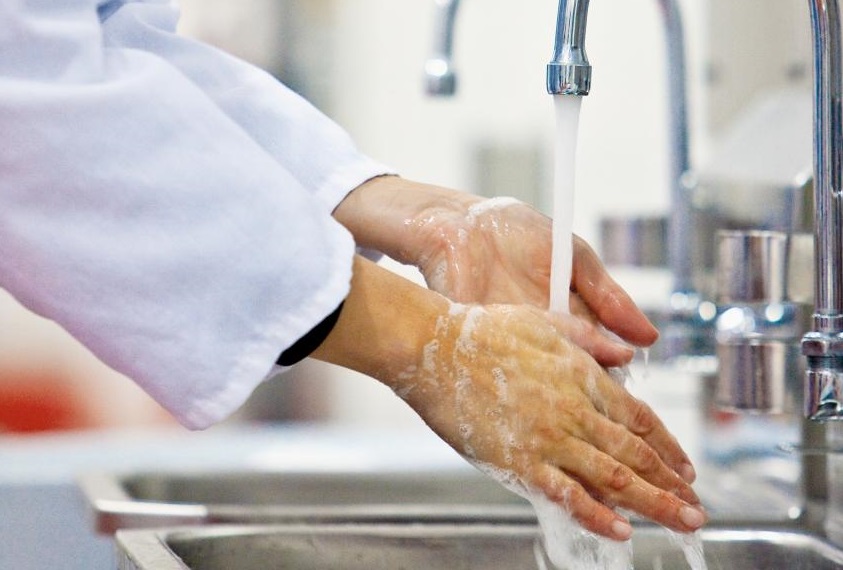
Sometimes people are asymptomatic and still carry the hepatitis A virus. That means they can unknowingly transfer the virus to others through food or food contact surfaces. We know that the hepatitis A virus is in feces, so this is one of many reasons why we – staff, managers, and customers -have to be laser focused on personal hygiene. Everyone has to pay attention and wash hands when they should be washed using the proper procedures. If your operation does not have a written standard operating procedure (or recipe) for hand washing, there are excellent resources by FoodHandler on our Food Safety Resources page. Further, single-use gloves always need to be used when handling ready-to-eat foods—that is a Food Code requirement because it adds a barrier (an extra layer of protection) between the hands and the food being handled.
The health and hygiene of those working in foodservices is so critical, not just because of hepatitis A and other foodborne illnesses but also in conveying a sense of cleanliness about the operations. We just have to be meticulous about hands because they can so easily contaminate food and work surfaces.
Following the practices described is critical for controlling not only hepatitis A, but other foodborne pathogens. Be proactive. Risk nothing!
READ MORE POSTS


The Cold Chain in the Hot Summer Months
Keeping foods at proper cold holding temperatures (between 28°F and 41°F maximum or 0°F for frozen food) from the food manufacturers to your customers has to be one of our strongest links to safe food. Sometimes that is referred to in the food industry as “maintaining the COLD CHAIN”. Any slip ups in the cold chain, and we have a weak link. If you accept the food, you have greatly increased your foodborne illness risk and compromised your food quality.
Routes of Foodborne Illness & Germs
From your sniffling coworker to the raw chicken on your kitchen cutting board, everyday life is full of potential infectious hazards. With germs so common and seemingly everywhere, knowing how germs spread is vital to preventing infection and foodborne illness. There are seven possible ways for the transmission of bacteria and viruses to take place. Although some of these microorganisms in our environment are good for us and protect us, disease causing pathogens are the germs or bad guys.

Handling Leafy Green Salad
We have had several produce outbreaks of foodborne disease from our lettuce, spinach, and other greens in the last several years that have been devastating to the produce growers and distributors, retail grocery stores, restaurants, and consumers.