

Seafood Safety for Lent: Essential Guidelines for Foodservice Operations
As Lent approaches, many foodservice operations prepare for an increase in seafood sales and some operators start offering seafood options, something they may not offer on their traditional menu. Whether you’re a restaurant expanding your fish offerings or a school or hospital kitchen accommodating meatless Fridays, proper seafood handling is critical to protecting your customers. For the most part, the same rules of food safety that we discuss in these blogs and our webinars apply to seafood. But seafood does present some unique food safety challenges that demand attention at every step, from supplier selection to final plating.
Your seafood safety program begins long before the product arrives at your back door. Selecting reputable suppliers is your first and most important line of defense. Some operators only have one option, the broadline distributor they traditionally use. But others, especially those in larger metropolitan areas, have the luxury of seeking out seafood suppliers. Regardless of which supplier you use, you should always look for suppliers who source from processors approved by regulatory authorities and who maintain proper cold chain documentation. Ask potential suppliers about their HACCP plans, inspection records, and traceability systems.
When receiving seafood, verify that products arrive at 41°F or below for fresh fish and remain solidly frozen for frozen items. Check packaging for integrity, ensure there are no off-odors, and confirm that fresh fish has clear eyes, firm flesh, and bright red gills. Reject any shipment that doesn’t meet these standards, regardless of your relationship with the supplier. Make sure to document conditions and temperatures of product at receiving in your receiving logs.
Once seafood passes your receiving inspection, immediate and proper storage is essential. For safety, fresh fish should be stored at temperatures lower than 41°F. To maintain peak quality, the National Oceanic and Atmospheric Administration recommends storing fresh fish on ice so that it remains as close to 32°F as possible. To do this safely in a commercial foodservice means you use perforated pans that allow meltwater to drain. Replace ice daily and never allow fish to sit in standing water. Store seafood on the lower shelves of your cooler to prevent cross-contamination with ready-to-eat foods.
Frozen seafood must remain at 0°F or below until you’re ready to thaw it. To maintain peak quality, it is best not to store seafood near strong-smelling foods, because fish can absorb odors. Use a first-in, first-out rotation system and label all items with receive dates. Fresh fish should be used within one to two days, while properly frozen seafood can be stored for several months depending on the species.
Improper thawing is one of the most common seafood safety mistakes in foodservice. Never thaw seafood at room temperature or in warm water. Both of these practices create ideal conditions for bacterial growth. Instead, use one of three approved methods.
…the increased seafood volume during Lent presents both opportunity and risk for foodservice operations. Success requires diligence at every stage within the flow of food…
The preferred method, and the gold standard, is refrigerator thawing, where frozen seafood defrosts slowly at 41°F or below. This requires planning ahead, as larger items may need 24 hours or more to fully thaw.
For faster thawing, submerge vacuum-sealed seafood in cold running water, ensuring the water temperature stays at 70°F or lower. The water must be kept running during the period in which you are thawing the product. It does not need to be on at full velocity, but according to the food code, it does need to be at a sufficient velocity to agitate and float off loose particles. During this thawing process, monitor the product and ensure that it does not rise above 41°F. Once it does rise above 41°F, your four-hour time starts to get it back to refrigeration temperatures and under 41°F to maintain product safety.
The third option is microwave thawing, but only if you’re cooking the product immediately afterward. I am not entirely sure how much of an option this is with seafood, it is certainly not the thawing or cooking method that I would select, but it is an option that is permissible in the food code.
Histamine poisoning, also called scombroid poisoning, is a particular concern with certain fish species including tuna, herring, and mackerel. Unlike most foodborne illnesses, histamine formation cannot be destroyed by cooking, making prevention critical.
Histamine forms when certain fish are held at improper temperatures, allowing naturally occurring bacteria in many fish species to break down the amino acid histidine into histamine. This process is traced directly to storing seafood at incorrect temperatures. Time and temperature abuse at any point from catch to service can trigger this process. Fish may look, smell, and taste completely normal while containing dangerous histamine levels.
Prevention requires strict temperature control throughout the cold chain. Always maintain fish at 41°F or below. Limit the time seafood spends in the temperature danger zone during prep work. When preparing large quantities as we might in a foodservice operation, work in small batches and return unused portions to proper cold storage as soon as possible.
The increased seafood volume during Lent presents both opportunity and risk for foodservice operations. Success requires diligence at every stage within the flow of food: choosing suppliers with strong safety records, maintaining proper storage temperatures, using approved thawing methods, and understanding species-specific risks like histamine formation. With proper planning and execution, you can safely serve delicious seafood throughout the season while protecting both your customers and your operation. Risk Nothing.
READ MORE POSTS

Quat Binding – Why this Can Have a Disastrous Impact on Your Sanitation Program.
In June, I had the opportunity to represent FoodHandler and speak on food safety behavior for customers of Martin Bros. Distributing in Waterloo, Iowa. One of the questions that was asked caught me a little off guard. The question was about quat binding. It caught me off guard not because it was a bad question, but only because it was not something I had previously been asked nor had not yet been exposed to the phenomenon. However, I soon learned that in certain jurisdictions, it is resulting in changes to how sanitizing cloths are to be stored in sanitizing buckets (or not) in the foodservice industry. When I returned home from the trip, I had to dig into it to learn about what quat binding is and how it might impact foodservice operations.
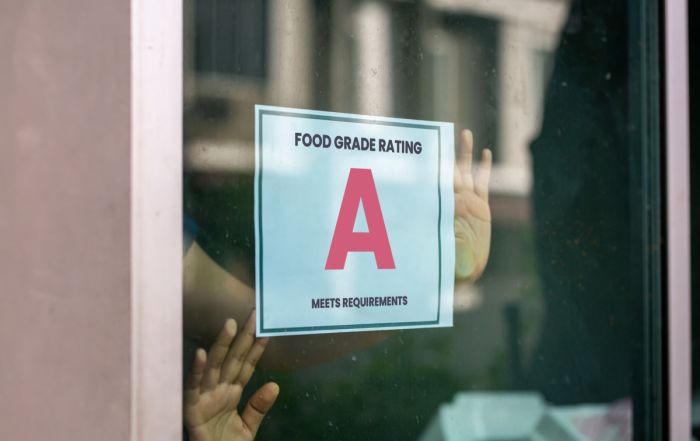
Are Grades for Foodservice Inspections a Good Idea?
I generally try to stay away from controversial topics in my blog, but this is one I thought it might be interesting to discuss. Occasionally on my travels, I will come across a state or a local jurisdiction that requires foodservice inspection scores be posted in the window of the establishment. The idea is to allow would-be customers the ability to see how the foodservice operation in which they are about to eat scored on their latest health inspection.
Neglected Safety: CDC Report Casts Doubts on the Ability of the Foodservice Industry to Ensure Ill Workers Stay at Home
Early in June, the Centers for Disease Control and Prevention released a report outlining foodborne illness outbreaks in retail foodservice establishments. The report outlined outbreaks from 25 state and local health departments from 2017 through 2019.

Keeping Food Safe While Serving Outdoors
This afternoon I met some friends for lunch and as I drove through our beautiful downtown area in Manhattan, KS, I noticed that many people were taking advantage of the gorgeous weather and dining outside with friends. For our local community - outdoor dining is one of the remnants of COVID that we actually have come to enjoy on beautiful days. With spring in full swing and summer just around the corner, many foodservice operations are taking advantage of the warm weather by offering outdoor dining options.