
Food Service Hand Hygiene: Basic Handwashing – Part II
Ignoring handwashing as a priority is easy until faced with a crippling lawsuit. Your risk of transmitting a foodborne disease via a food workers hands will never be zero, but the good news is training your crew about handwashing is not complicated. Molding behavior to do it at the right time, using the correct method is the tough part. The Centers for Disease Control & Prevention says the single most effective way to stop the spread of infection is through handwashing. Last month’s article was on the physical equipment to help get better handwashing compliance. The most important part is the practice of the basic handwashing steps:
|
1 |
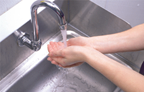 |
WET HANDS FIRST before applying soap–Turn on warm (approx. 100°F) water –the most sanitary faucet is a hands-free type. |
2 |
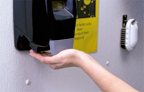 |
APPLY MILD SOAP from a dispenser (touch-free is best) that uses an airless bagged soap system (keeps the soap from becoming contaminated). |
|
3 |
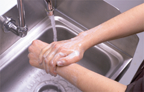 |
SCRUB / FRICTION –Lather hands briskly for 20 SECONDS with FRICTION. Scrub palm to palm, backs of hands, between fingers & thumb, wrists & forearm. |
4 |
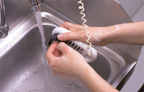 |
FINGERTIPS — Scrub the fingertips & nails – most contamination is here. Use the “CLAW PAW” by bending fingertips & nails into opposite palm OR use a soft (fused bristle) nailbrush & count to twenty. |
|
5 |
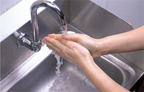 |
RINSE off soap with warm water & more friction. |
6 |
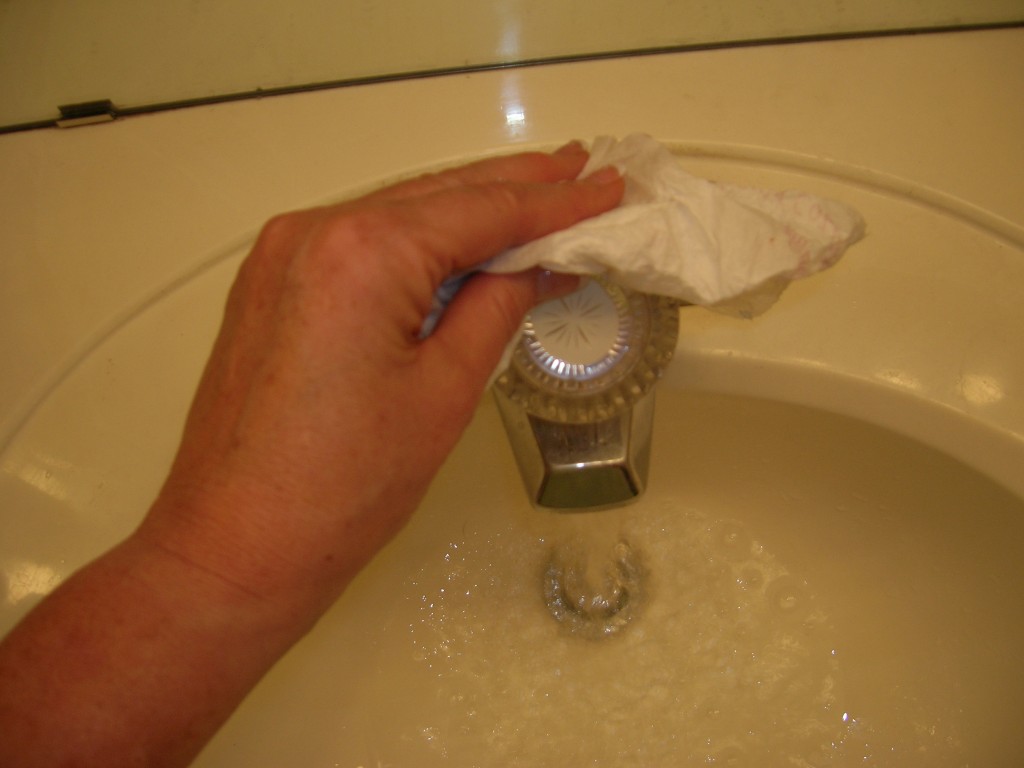 |
DON’T RE-CONTAMINATE fingertips by touching faucet handles, dispenser buttons or levers. If it’s not a hands-free faucet, shut off faucet with paper towel. |
|
7 |
|
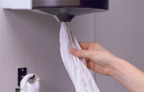
DRY hands completely using paper towels –touch-free dispenser is best. If using alcohol hand sanitizer in your procedure, apply and let dry. |
8 |
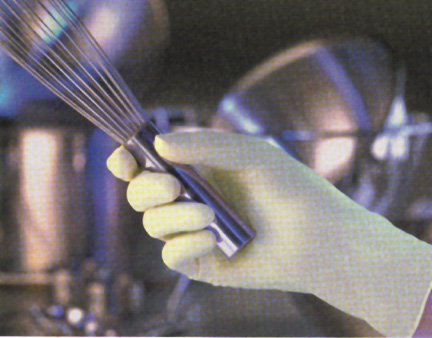 |
USE UTENSILS, paper wraps, or put on disposable GLOVES if handling READY-TO-EAT FOODS. Wash again if hands become contaminated. Handwashing frequency is task specific – not time specific. |
When to Wash Hands—Customize your written “when to wash” policy so it is specific to your food handling tasks.
- Wash hands at the designated hand sink and ALWAYS wash after using the restroom (this is a critical step to safer hands).
- Wash before handling food and between raw food types (i.e. raw meats/raw fruits & vegetables) and ready-to-eat foods (washed foods, cooked foods, sandwiches, etc.)
- Wash when returning from breaks or changing food handling tasks, such as moving from different food types.
- Wash after handling soiled equipment or utensils or periodically if hands sweat under gloves.
- Wash as often as necessary to remove contamination & prevent cross-contamination.
- Glove use itself does not guarantee food safety. Wash before putting on gloves & between glove changes. Use the right type of glove for specific tasks (light duty poly vs. form-fitting vinyl).
- Wash after touching the body, coughing, sneezing, using a tissue, eating, smoking, or drinking.
- Wash after handling money, handling garbage, or using the phone.
- Wash & change gloves after any activities that contaminate the hands or the gloves.
Bottom Line: Put your professional hand hygiene plan of action in a written format for the crew. The 2013 FDA Food Code uses the phrase “active managerial control” to address foodborne illness risk factors. Controlling hand contamination is one of the center subjects for operators, the food industry and regulatory agencies to work together on risk reduction.
***
About the Author: Lacie Thrall
 Lacie Thrall passed away in early 2017 after a long illness. She dedicated her 35-year career to improving the health and well-being of others by promoting food safety best practices. Lacie worked in environmental health for 17 years before joining FoodHandler in 1997 as the Director of Safety Management. While at FoodHandler, she trained employees and customers on safe food handling practices, including proper hand hygiene and glove use. Later as a FoodHandler consultant, Lacie provided the foodservice industry with food safety information and advice through her blog on FoodHandler.com.
This information is provided as a general guideline and is not intended to be, nor does it, constitute legal or regulatory advice. Additional Federal regulations may apply to your particular circumstances. State, regional and local laws, ordinances and regulations may also apply.
READ MORE POSTS
Food Traceability in Foodservice Operations: An Essential, and Soon-to-be Required, Component of your Food Safety Plan
In June, I discussed the importance of having a solid food defense plan, and I provided you some resources for developing or strengthening your food defense plan. As I was writing those blogs, my mind kept turning toward food traceability. While they are distinctly different concepts, food traceability goes hand-in-hand with a food defense program. I would argue for your food defense plan to be effective, you must have an effective internal food traceability program, where you can trace the product back to the supplier (backward traceability), but also be able to trace the product from the supplier to the guest who was served the product (forward traceability).
Food Defense Plan Resources – at just the right price…
Earlier in the month, I discussed the importance of having a solid food defense plan in place for your foodservice operation. Even if the first version of your plan is not perfect, it is a start. Having plans down on paper will force you to think through the process and ensure the vulnerable points where opportunities exist for possible contamination within the operation are mitigated.
Don’t Turn a Blind Eye to Your Food Defense Practices
Late last week, as I mindlessly scrolled through Twitter, I ran across a Tweet suggesting the #IceCreamChallenge from summer 2019 was the real cause of the Coronavirus spread. Of course, the Tweet was made tongue in cheek, but it did cause me to reflect on that challenge, which had a short life on social media in the summer of 2019.
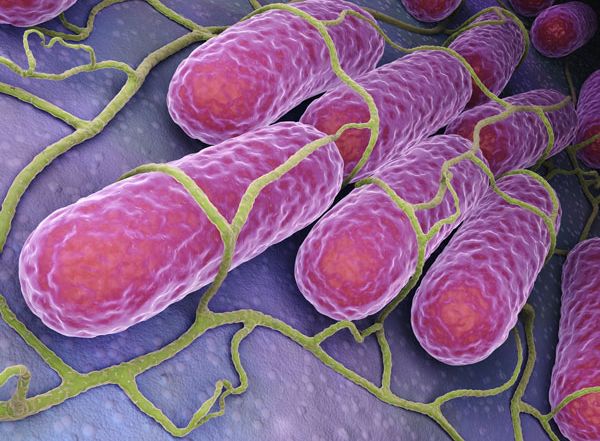
Salmonella and Listeria monocytogenes: Serious Threats to the Safety of Food
Earlier in the month, I mentioned the top microbial enemies we all face in foodservice operations, E. coli, Campylobacter, Salmonella, and Listeria monocytogenes. While we discussed E. coli and Campylobacter, we did not get around to discussing Salmonella or Listeria monocytogenes.