
The Eleven Commandments of Food Safety at Your Restaurant
 Lists help us remember all kinds of information. Given the list of recent national foodborne outbreaks in the news, keep repeating this list to your food service team. They are kind of like “commandments”. As a professional in a food service facility we should think of the very basic food safety concepts that every crew member should aspire to learn, even though this list may have different priorities based on your menu. The first 3 apply to anyone who serves food, from a bag of popcorn to a full course meal. As chefs or managers, if we can “set the example” by repeating good food safety practices visibly to the crew, it will help them understand how important it is to the success of your facility. Thou shalt:
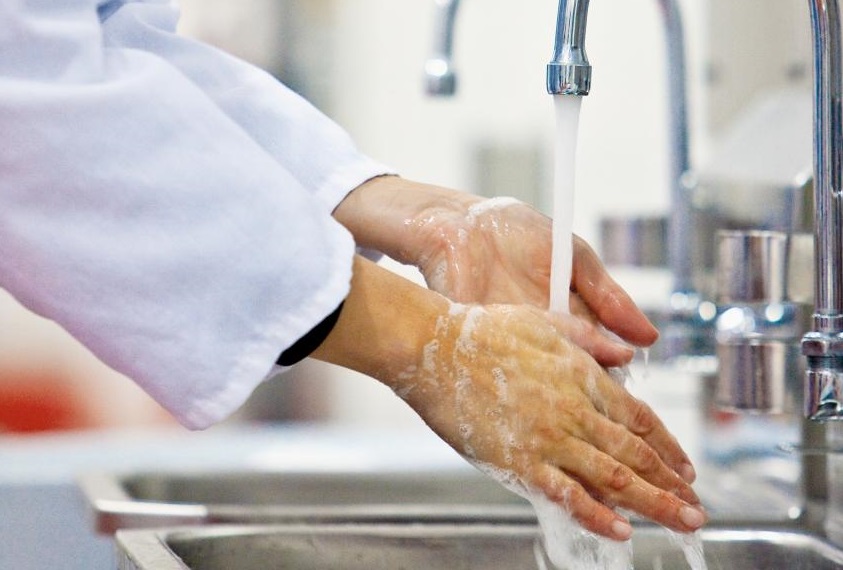
1.) Train every employee about correct handwashing, monitor it, document the process & use positive reinforcement. Use a 20 second handwash, cleaning the fingertips with a soft nailbrush. Know how, when, and why it’s important. Handwashing is the number one practice YOU CAN DO to prevent a foodborne illness!
2.) Be a safe food handler. Restrict or send home crew members that are ill, so they do not handle foods. Require strict personal hygiene from all employees. Wear clean uniforms and hair restraints. Never wear jewelry or artificial nails at work.
3.) Enforce “no bare hand contact with ready-to-eat foods” and train your staff exactly what that is. Wash hands and use alternatives such as disposable gloves, clean utensils or paper wraps to handle all ready-to-eat foods.
4.) Identify all potentially hazardous foods on your menu and keep them as cold as possible during storage and preparation.
35 to 38°F internal food temperature is best — no higher than 41° F maximum.
Keep FROZEN FOOD AT 0°F. Thaw foods safely a day in advance under refrigeration.
5.) Obtain food supplies from reputable approved sources. Inspect foods for spoilage and check temperatures when receiving from the supplier, during cold storage, and on the prep tables. When in doubt, throw it out!
6.) Observe time & temperature guidelines to prevent cross-contamination in storing and handling food prepared in advance of service. Label foods prepared with product, date, time, and temperature.
7.) Teach all crew members to use temperature charts and a stem thermometer. Remember to keep foods out of the DANGER ZONE 41° to 135° F. Use the four hour limit. Keep hot foods hot and cold foods cold!
Check food temperature in 2 places — the thickest portion & the center.
Sanitize the thermometer stem before & after use with an alcohol swab.
8.) Avoid cross-contamination of raw and ready-to-eat foods by hands, utensils and equipment. Keep raw products separate from ready-to-eat foods. Wash, rinse and sanitize food contact equipment.
9.) Cook and heat-process food to above recommended minimum temperature (usually 145°F, 155°F or 165°F based on the kind of food). Post a chart for the crew. Memorize your minimum cooking temperatures for the common raw foods you cook in your facility.
10.) Rapidly chill hot food to below 41°F within 4-6 hours! Use ice bath, shallow pans, stirring, cut or reduce into smaller portions, and uncover while in the cooling process (check local regulations).
11.) Reheat food quickly to 165° F + (hold for 15 seconds) within 2 hours. Hot hold foods at 135°F or above.
Bottom Line: Repeat, repeat, and repeat the list to the new staff members and the veterans!
***
About the Author: Lacie Thrall
 Lacie Thrall passed away in early 2017 after a long illness. She dedicated her 35-year career to improving the health and well-being of others by promoting food safety best practices. Lacie worked in environmental health for 17 years before joining FoodHandler in 1997 as the Director of Safety Management. While at FoodHandler, she trained employees and customers on safe food handling practices, including proper hand hygiene and glove use. Later as a FoodHandler consultant, Lacie provided the foodservice industry with food safety information and advice through her blog on FoodHandler.com.
This information is provided as a general guideline and is not intended to be, nor does it, constitute legal or regulatory advice. Additional Federal regulations may apply to your particular circumstances. State, regional and local laws, ordinances and regulations may also apply.
READ MORE POSTS

The Cold Chain in the Hot Summer Months
Keeping foods at proper cold holding temperatures (between 28°F and 41°F maximum or 0°F for frozen food) from the food manufacturers to your customers has to be one of our strongest links to safe food. Sometimes that is referred to in the food industry as “maintaining the COLD CHAIN”. Any slip ups in the cold chain, and we have a weak link. If you accept the food, you have greatly increased your foodborne illness risk and compromised your food quality.
Routes of Foodborne Illness & Germs
From your sniffling coworker to the raw chicken on your kitchen cutting board, everyday life is full of potential infectious hazards. With germs so common and seemingly everywhere, knowing how germs spread is vital to preventing infection and foodborne illness. There are seven possible ways for the transmission of bacteria and viruses to take place. Although some of these microorganisms in our environment are good for us and protect us, disease causing pathogens are the germs or bad guys.
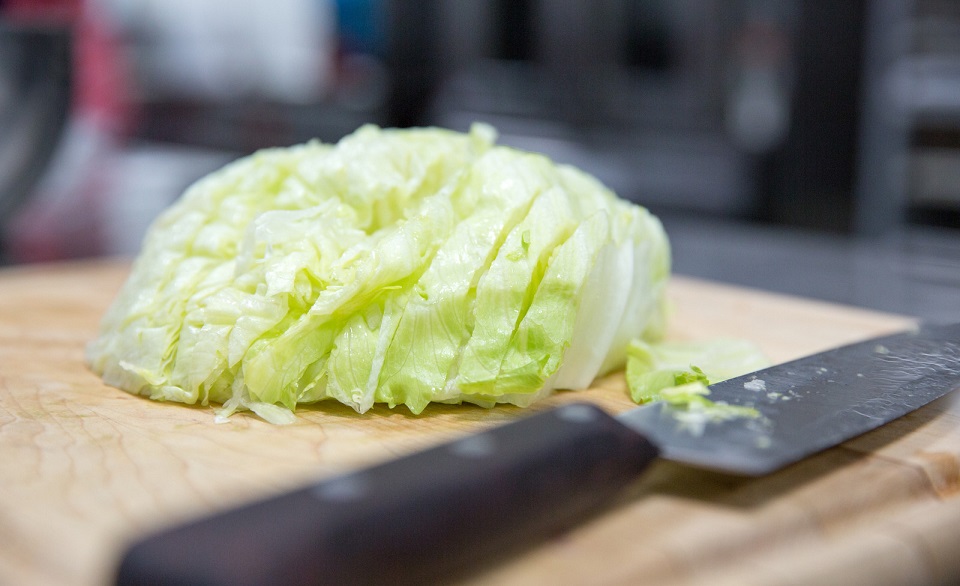
Handling Leafy Green Salad
We have had several produce outbreaks of foodborne disease from our lettuce, spinach, and other greens in the last several years that have been devastating to the produce growers and distributors, retail grocery stores, restaurants, and consumers.